

Exploring Traditional Labor Practices: The Efficacy and Safety of Wives’ Tales Methods for Labor Induction and Augmentation
DOI:
https://doi.org/10.14740/jcgo1556Keywords:
Labor, Labor induction, Labor augmentation, Wives’ tales, Obstetrics, Membrane sweeping, Primrose oil, Date fruitAbstract
Background: Traditional methods for labor induction and augmentation, referred to as “wives’ tales,” are commonly used to hasten and ease labor. Popular approaches include acupuncture and acupressure, breast or nipple stimulation, castor oil, date fruit, exercise, membrane sweeping, primrose oil, sexual activity, pineapple, raspberry leaf tea, and spicy foods. Evidence regarding their efficacy and safety is limited and inconsistent.
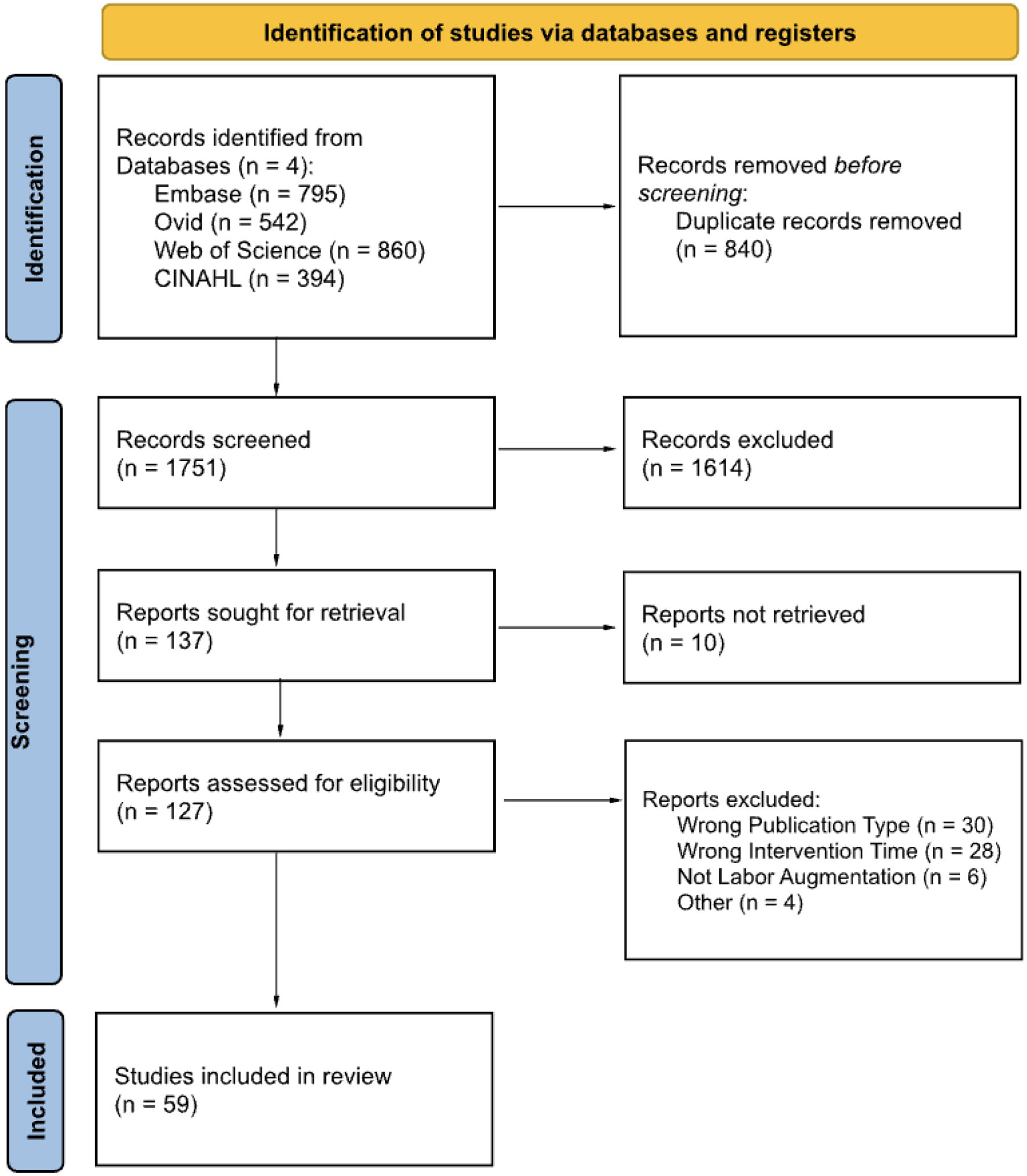
Methods: A scoping review of available literature was conducted, examining natural techniques for labor induction and augmentation. Electronic databases, including Embase, OVID Medline, Web of Science, and CINAHL, were utilized to ensure a thorough and varied collection of peer-reviewed articles. A structured search was performed, and all articles were screened for eligibility by five researchers. Data collection on the 59 final studies was performed, noting primary outcomes of labor initiation and duration as well as secondary outcomes, such as cervical change, delivery mode, and maternal and neonatal outcomes.
Results: Among the methods reviewed, membrane sweeping, primrose oil, date fruit, and yoga demonstrated the most consistent benefits. Membrane sweeping increased spontaneous labor within 72 h and reduced the need for further induction methods. Primrose oil improved cervical ripening and shortened the first stage of labor. Exercise, especially yoga, decreased first stage duration and was associated with higher rates of vaginal delivery. In contrast, acupuncture and acupressure, breast or nipple stimulation, castor oil, and sexual intercourse showed inconsistent effects. No significant adverse maternal or neonatal outcomes were consistently reported among low-risk patients. There were no eligible studies found for pineapple, raspberry leaf tea, or spicy foods.
Conclusions: Some traditional labor augmentation methods, including membrane sweeping, primrose oil, date fruit, and exercise, demonstrated potential benefits in initiating and shortening labor in low-risk patients without significant adverse effects reported. However, the overall evidence remains limited and heterogeneous due to inconsistent methodology. These interventions should not replace evidence-based obstetrical management, but physicians may consider discussing select methods with interested patients as a part of shared decision-making and patient education. Further, high-quality, standardized studies are needed to better establish efficacy and safety and to guide evidence-based recommendations for labor induction and augmentation.
Published
Issue
Section
License
Copyright (c) 2026 The authors

This work is licensed under a Creative Commons Attribution 4.0 International License.