

Comparative Analysis of Intracervical Dinoprostone Gel and Vaginal Misoprostol for Labor Induction in a Primigravida at Term
DOI:
https://doi.org/10.14740/jcgo1539Keywords:
Intravaginal misoprostol, Intracervical dinoprostone, Labor induction, PrimigravidaAbstract
Background: The study addresses critical aspects of contemporary obstetric practices regarding labor induction in primigravida at term, focusing on the effectiveness and safety of intravaginal misoprostol (25 µg every 6 h for a maximum of four doses) and dinoprostone gel (0.5 mg every 6 h for a maximum of three doses).
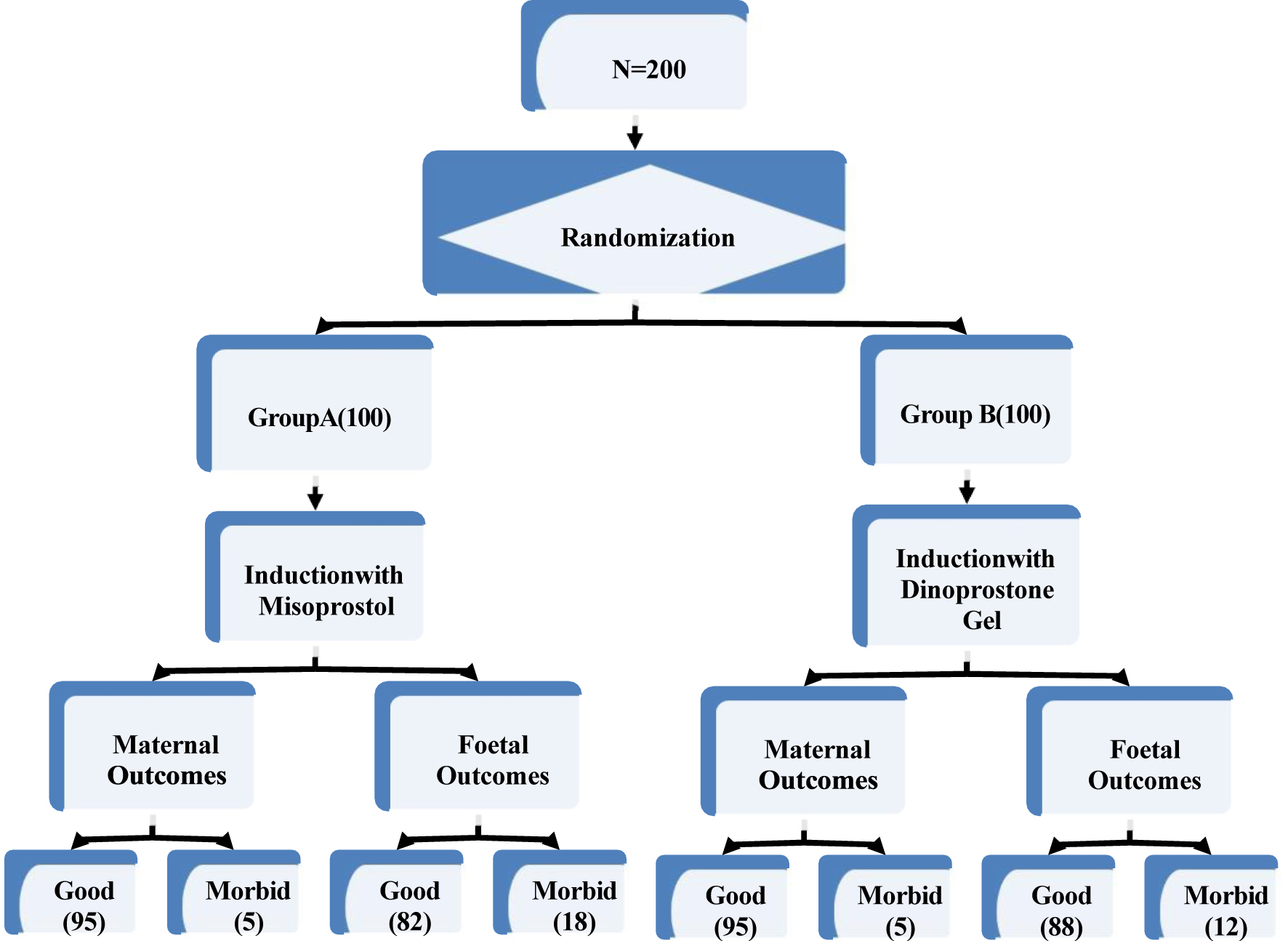
Methods: It was a prospective interventional study. Inclusion criteria were: primigravida with an indication for labor induction, gestational age of 37 weeks or more, estimated fetal weight < 3.5 kg, Bishop score < 6 indicating an unfavorable cervix, singleton fetus, cephalic presentation, reactive fetal heart rate pattern, and patient consent. Exclusion criteria were: previous cesarean section uterine surgery, cephalo-pelvic disproportion, malpresentations, evidence of fetal distress pre-induction, grand multipara, fetal anomalies, intrauterine death, allergy to prostaglandins, major degree of placenta previa, and estimated fetal weight > 3.5 kg. Both the agents were compared in terms of: change in Bishop score (depending upon the doses of drugs and contractions), induction to active phase of labor, induction to delivery interval, total duration of labor, intrapartum complications (tachysystole, chorioamnionitis, rupture uterus), mode of delivery, fetal outcome at birth (fetal distress-hypoxia, bradycardia, meconium-stained liquor) Apgar score, postpartum complications like postpartum hemorrhage, and puerperal sepsis. Prospective interventional study was conducted among 200 primigravida women after meeting the strict inclusion and exclusion criteria of the hospital. Groups A and B were randomized with 100 patients each and maternal and fetal outcomes were studied. Partogram was used for monitoring and oxytocin was used as per necessity. Maternal and fetal outcomes were studied.
Results: The average gestational age was 38.74 ± 1.03 weeks, with a range of 37 to 41 weeks. The mean pre-induction Bishop score was 4.39 ± 1.02, with scores ranging from 2 to 6. The average total duration of labor experienced by these participants was 13.94 ± 4.43 h. The predominant indication for labor induction was identified as intrahepatic cholestasis of pregnancy (IHCP), accounting for 35.5% of cases. Subsequently, postdatism was the second most prevalent reason at 22.5%, followed by pregnancy-induced hypertension (PIH) at 19.5%. It was noted that the majority of pregnant women, approximately 90%, required only one to two doses of inducing agents, either intravaginal misoprostol or dinoprostone gel. While both agents were effective in initiating labor, intravaginal misoprostol demonstrated superiority in expediting labor progression and reducing the duration of labor. Both the agents exhibited comparable rates of neonatal and maternal complications, highlighting their overall safety and efficacy in clinical practice. In terms of the need for oxytocin in both groups, there was a statistically significant difference demonstrating better efficacy of misoprostol than dinoprostone gel.
Conclusions: While both intravaginal misoprostol and dinoprostone gel were successful in inducing labor, our results showed that intravaginal misoprostol was superior in several important areas.
Published
Issue
Section
License
Copyright (c) 2025 The authors

This work is licensed under a Creative Commons Attribution-NonCommercial 4.0 International License.