

Spontaneous Adrenal Hemorrhage in Pregnancy
DOI:
https://doi.org/10.14740/jcgo1538Keywords:
Adrenal hemorrhage, Adrenal crisis, Life-threatening, Diagnosis, ChallengingAbstract
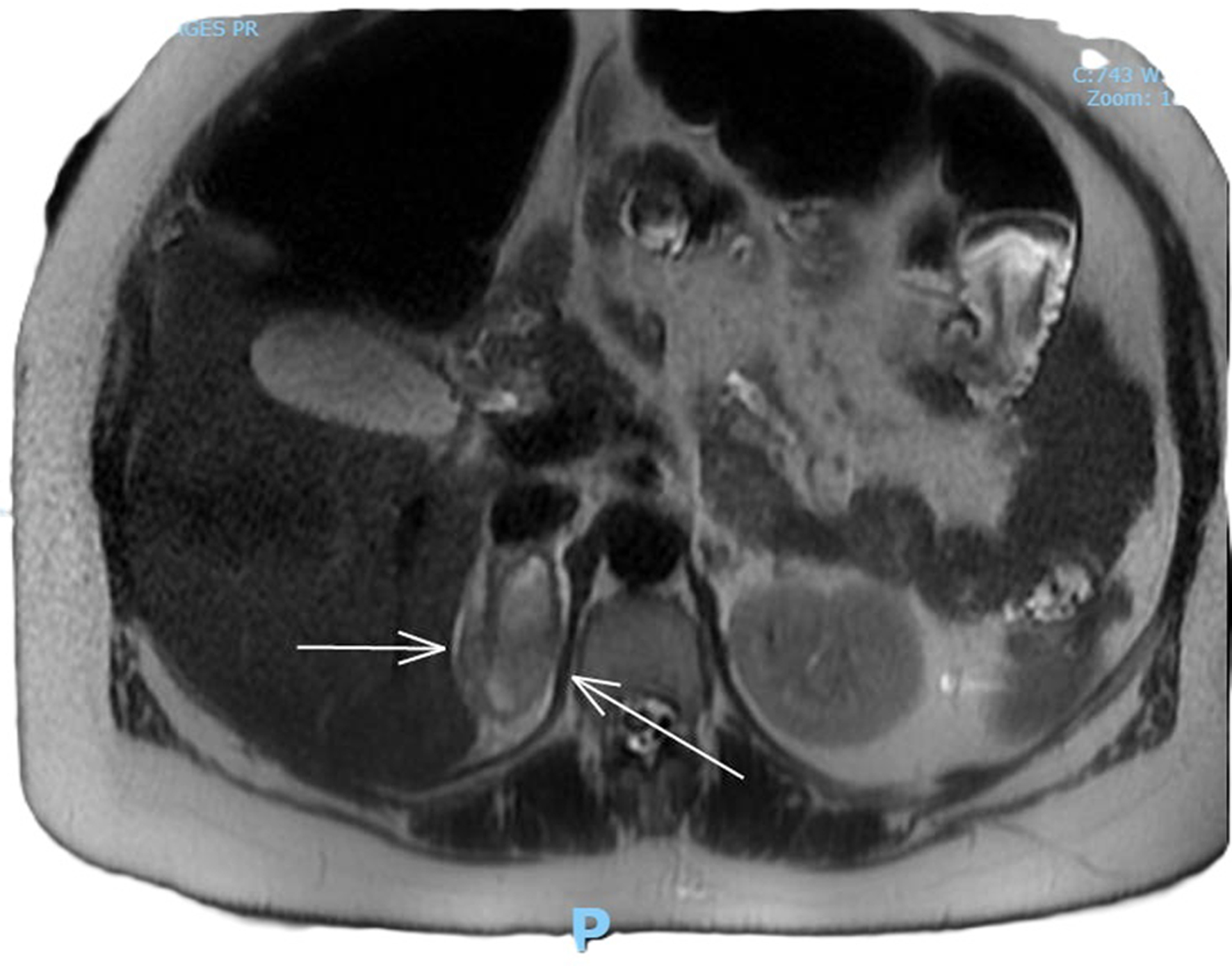
Spontaneous adrenal hemorrhage (SAH) is a rare condition that may lead to life-threatening adrenal insufficiency or adrenal crisis if not addressed appropriately. Abdominal pain during pregnancy has a broad differential diagnosis, which includes SAH. There are very few studies on the precipitating factors, management, and optimal mode of delivery. We present a 32-year-old multiparous woman who presented at 33 weeks of gestation with right-sided flank pain. The initial ultrasound of the abdomen was unremarkable. The diagnosis of SAH was made by magnetic resonance imaging (MRI) of the abdomen, and the patient management included analgesia, serial hemoglobin assessments, and clinical examination which resulted in uncomplicated vaginal delivery. She was followed up with endocrinology at 3 months with plan for repeat MRI of the abdomen. SAH, although rare, is an important consideration when evaluating abdominal and flank pain during pregnancy. It is a challenging diagnostic and therapeutic condition. The management options vary from conservative management to surgical intervention depending on the stability of the patient. A multidisciplinary team (MDT) approach is a very crucial aspect of diagnosis and management of this rare condition.
Published
Issue
Section
License
Copyright (c) 2025 The authors

This work is licensed under a Creative Commons Attribution-NonCommercial 4.0 International License.