

Incidence and Maternal Outcomes After Emergency Department Hysterotomy in the Setting of Trauma
DOI:
https://doi.org/10.14740/jcgo1612Keywords:
Resuscitation, Hysterotomy, Cesarean, Section, Trauma, ObstetricAbstract
Background: Trauma in the pregnant patient remains a challenge due the anatomic and physiologic changes that occur. In the setting of extremis, including cardiac arrest, a resuscitative hysterotomy (RH) may be performed to save the life of the mother and often the fetus. The incidence and maternal outcomes of RH in the setting of trauma remain poorly described.
Methods: We analyzed data from the Trauma Quality Improvement Program (TQIP) data registry for any encounter that had documented female sex, diagnosis of pregnancy, and a procedure that involved removal of fetal contents from the uterus in the emergency department (ED).
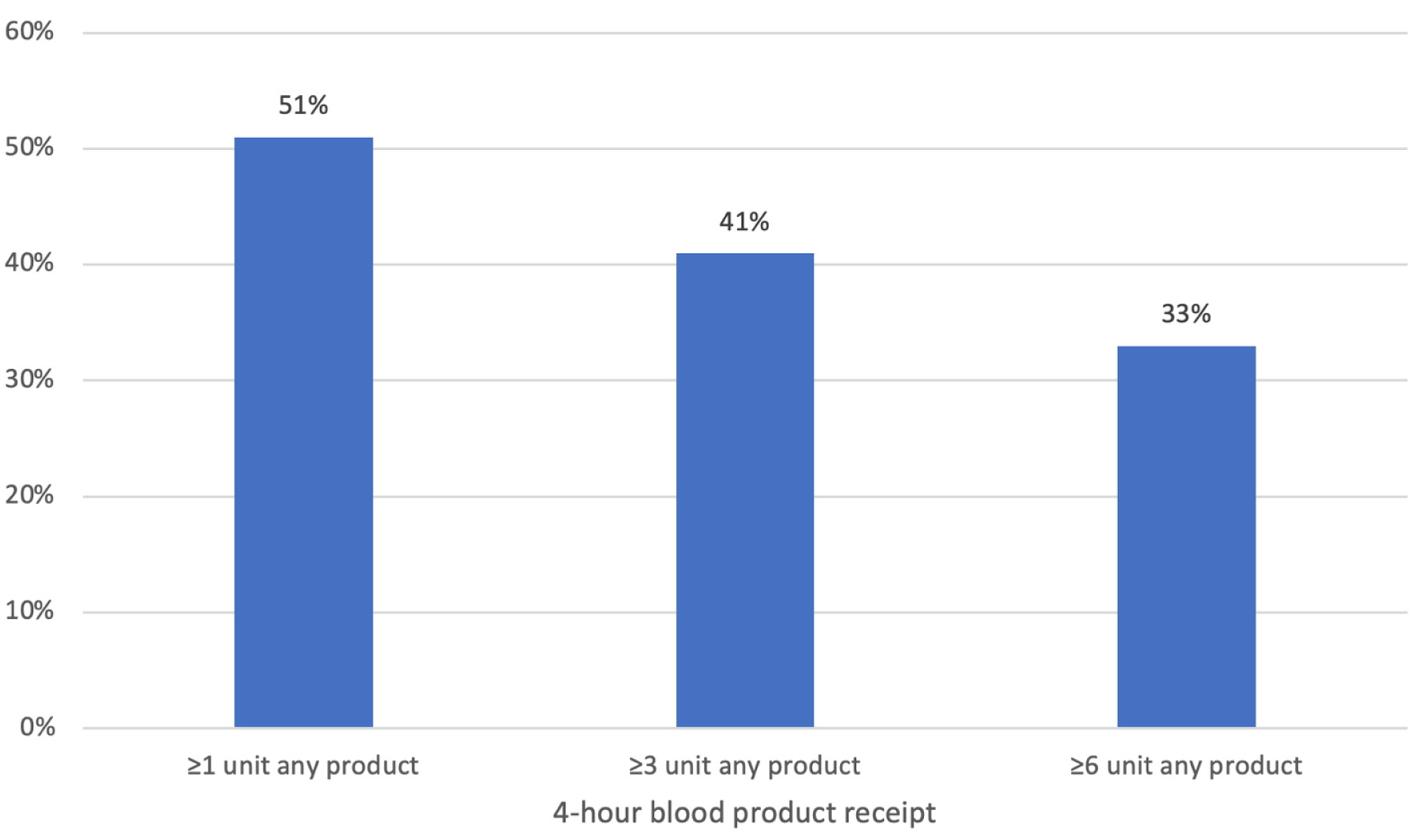
Results: From 2017 to 2023, there were a total of 8,014,737 total encounters, of which 142 RH procedures occurred in the ED and met inclusion for this analysis. The median maternal age was 27 years (interquartile range (IQR) 22–31, range 16–44). There were 86 (61%) that went straight from the ED to the operating room. The majority received at least one unit of blood products in the first 4 h. The median time from arrival to procedure start was 25 min (IQR 12–50) with the fastest being immediately upon arrival. There were 125 (88%) that had signs of life on arrival. For other resuscitation procedures, there were 48 (34%) that were intubated, one that had a resuscitative endovascular balloon placed, 25 (18%) that received cardiopulmonary resuscitation (CPR), and six (4%) that received a resuscitative thoracotomy. Among those with documented prehospital cardiac arrest, two (10%) survived to hospital discharge. Among those with documented ED CPR, one (4%) survived to hospital discharge. Among those with no signs of life on arrival, none survived to hospital discharge.
Conclusions: RH was exceedingly rare and was associated with a high risk of maternal mortality.
Published
Issue
Section
License
Copyright (c) 2026 The authors

This work is licensed under a Creative Commons Attribution 4.0 International License.