

Uterine Fibroid Embolization in Patient With Symptomatic Uterine Leiomyomas in Uterine Didelphys
DOI:
https://doi.org/10.14740/jcgo1532Keywords:
Uterine artery fibroid embolization, Uterine didelphys, Post embolization syndromeAbstract
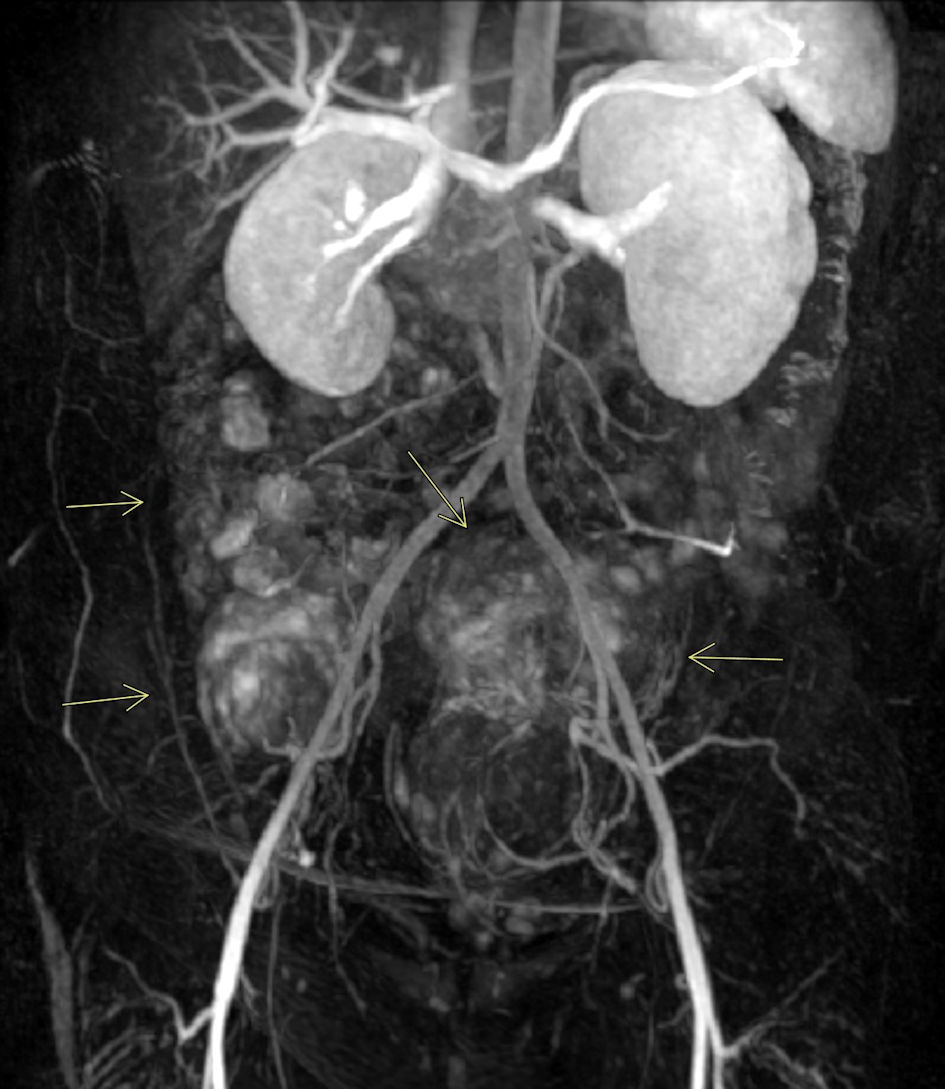
Uterine didelphys is a rare congenital anomaly resulting from compete failure of Mullerian duct fusion, occurring in 0.5-5% of women. Its coexistence with uterine leiomyomas is extremely uncommon, with an estimated prevalence of 0.0026%. Surgical treatments such as hysterectomy or myomectomy are commonly used for uterine fibroid treatments. However, Uterine fibroid embolization (UFE) is a minimally invasive, fertility-sparing alternative that remains underutilized. We report a case of a 41-year-old Vietnamese woman who presented with abnormal uterine bleeding and pelvic pain and was found to have uterine didelphys with bilateral symptomatic fibroids. Magnetic resonance imaging (MRI) confirmed large fibroids in both uteri, with the largest measuring 14 × 11 × 1cm on the left side. Following consultation with the patient, and given her preference for a non-surgical option, she underwent successful UFE via selective embolization of both uterine arteries using Terumo (Terumo Company, Tokyo, Japan) Hydropearls 200 - 400 µm microspheres. Post-angiographic embolization of the uterine fibroids confirmed complete occlusion of the fibroid vascular supply, and a post-embolization MRI is scheduled for 3 months after the procedure. The patient tolerated the procedure well with no complications. This case highlights the effectiveness of UFE in a patient with the rare co-occurrence of uterine didelphys and symptomatic leiomyomas. UFE offers a safe, minimally invasive alternative to surgery even in complex cases, and should be more widely considered in eligible patients.
Published
Issue
Section
License
Copyright (c) 2025 The authors

This work is licensed under a Creative Commons Attribution-NonCommercial 4.0 International License.