

Systematic Review and Meta-Analysis of Cesarean Scar Niche: Clinical Outcomes and Therapeutic Interventions
DOI:
https://doi.org/10.14740/jcgo1686Keywords:
Cesarean section, Uterine niche, Systematic review, Hysteroscopy, LaparoscopyAbstract
Background: Cesarean scar niche (isthmocele) is a significant complication following cesarean delivery, characterized by a hypoechoic myometrial defect at the previous incision site. Despite increasing clinical recognition, optimal management strategies remain controversial and comprehensive evidence synthesis is lacking. The study aimed to systematically review and meta-analyze the available evidence on clinical outcomes and therapeutic interventions for cesarean scar niche, thereby providing evidence-based recommendations for clinical practice.
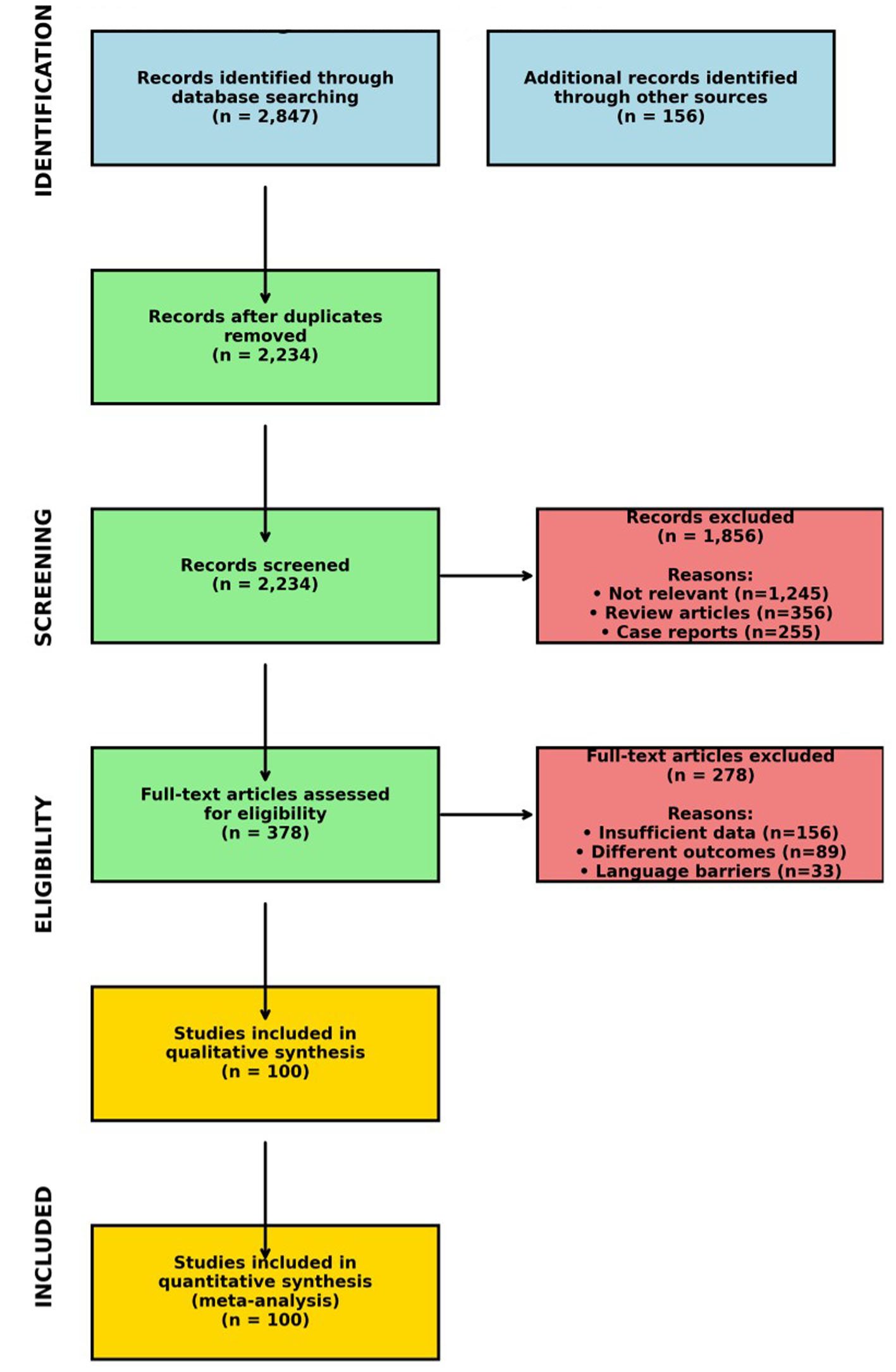
Methods: A systematic review and meta-analysis was conducted following the Preferred Reporting Items for Systematic Reviews and Meta-Analyses (PRISMA) 2020 guidelines. Electronic databases including PubMed/MEDLINE, Embase, Cochrane Central Register of Controlled Trials (CENTRAL), and Web of Science were searched from inception until June 2024. Studies reporting treatment outcomes for cesarean scar niche were included. Two independent reviewers performed the study selection, data extraction, and quality assessment using the Newcastle-Ottawa Scale (NOS). Treatment success rates were pooled using the random-effects meta-analysis. Heterogeneity was assessed using the I2 statistic and publication bias was evaluated using Egger’s regression test.
Results: One hundred studies with a total of 15,647 patients were included. The pooled success rate across all interventions was 81.8% (95% confidence interval (CI): 76.8–86.8%, I2 = 21.5%). Surgical interventions demonstrated significantly higher success rates than non-surgical approaches (78.8% vs. 57.0%, P < 0.001). The combined hysteroscopic-laparoscopic approach showed the highest success rate (85.2%), followed by hysteroscopic resection (79.4%) and laparoscopic repair (73.2%). Medical therapy achieved moderate success (64.8%), while conservative management showed limited effectiveness (44.0%). Complication rates were low, with bleeding being most common (3–12%).
Conclusions: Surgical interventions, particularly combined approaches, offer superior outcomes for symptomatic cesarean scar niche. Treatment choice should be individualized based on patient symptoms, fertility desires, and surgical risk factors.
Published
Issue
Section
License
Copyright (c) 2026 The authors

This work is licensed under a Creative Commons Attribution 4.0 International License.