| Journal of Clinical Gynecology and Obstetrics, ISSN 1927-1271 print, 1927-128X online, Open Access |
| Article copyright, the authors; Journal compilation copyright, J Clin Gynecol Obstet and Elmer Press Inc |
| Journal website https://jcgo.elmerpub.com |
Original Article
Volume 15, Number 3, September 2026, pages 114-125

Serum Lactate Dehydrogenase Levels as a Prognostic Marker for Maternal and Neonatal Outcomes in Hypertensive Pregnancy Complication: A Systematic Review and Meta-Analysis
Tania Taniaa, , e, Brigita Renatab, Ereis Valentinac, Oscar Odillo Lamanbb, Gabriela Claudiad
aSchool of Medicine and Health Science, Krida Wacana University of Indonesia, West Jakarta 11510, Indonesia
bSchool of Medicine and Health Sciences, Atma Jaya Catholic University of Indonesia, North Jakarta 14440, Indonesia
cFaculty of Medicine, Christian University of Indonesia, East Jakarta 13630, Indonesia
dFaculty of Medicine, Sebelas Maret University, Surakarta 57126, Indonesia
eCorresponding Author: Tania Tania, School of Medicine and Health Science, Krida Wacana University of Indonesia, West Jakarta 11510, Indonesia
Manuscript submitted April 29, 2026, accepted September 2, 2026, published online September 30, 2026
Short title: Serum LDH as a Prognostic Marker in HDP
doi: https://doi.org/10.14740/jcgo1604
| Abstract | ▴Top |
Background: Hypertensive disorders of pregnancy (HDP) are among the leading causes of maternal and perinatal morbidity and mortality worldwide. Given their sudden and acute onset, early diagnosis remains challenging. Elevated serum lactate dehydrogenase (LDH) levels are thought to reflect endothelial dysfunction, the central mechanism of preeclampsia, and may serve as a predictive marker for at-risk pregnancies.
Methods: A literature search identified studies published between 2015 and 2025 across ProQuest, PubMed, Springer Link, Science Direct, and EBSCO. This review included cohort and case–control studies examining serum LDH as a prognostic marker of maternal and neonatal outcomes in hypertensive pregnancy. Review Manager version 5.4 was used to pool data, comparing participants with serum LDH < 600 IU/L versus ≥ 600 IU/L.
Results: Twelve studies were included for systematic review and 11 for meta-analysis. Serum LDH levels were significantly associated with poor maternal outcomes, including placental abruption, eclampsia and fetal growth restriction (FGR), also with poor neonatal outcomes including low birth weight, IUFD and NICU admission. Across the included studies, elevated LDH levels (≥ 600 IU/L) consistently correlated with severe maternal complications and poor neonatal outcomes, supporting LDH as a marker of cellular injury and endothelial dysfunction that reflects disease severity. Early identification of elevated LDH may prompt closer surveillance and timely intervention.
Conclusion: Elevated maternal LDH levels (≥ 600 IU/L) are significantly associated with adverse maternal and neonatal outcomes in HDP, serving as a simple biochemical marker of disease severity and prognosis.
Keywords: Lactate dehydrogenase; Hypertensive; Maternal outcome; Neonatal outcome
| Introduction | ▴Top |
Hypertensive disorders of pregnancy (HDP) are among the leading causes of maternal and perinatal morbidity and mortality globally [1]. In low- and middle-income countries, HDP remain a major cause of maternal deaths, second only to hemorrhage and infection [2]. Atypical or delayed presentations of preeclampsia often lead to diagnostic challenges and delayed management, resulting in poor maternal and fetal outcomes.
Preeclampsia belongs to a spectrum of HDP in pregnancy ≥ 20 weeks, which includes gestational hypertension, transient gestational hypertension, preeclampsia, and superimposed on chronic hypertension [3]. HDP are associated with a wide range of maternal complications such as acute kidney injury, hepatic dysfunction, seizures, stroke, and coagulopathy, as well as long-term cardiovascular risks [4]. Fetal complications include fetal growth restriction (FGR), preterm birth, and stillbirth [5]. These outcomes highlight the importance of early identification and risk stratification of affected pregnancies.
The pathogenesis of preeclampsia is complex and multifactorial, involving both maternal and placental factors. Abnormal placental vascular remodeling leads to placental ischemia, hypoxia, and oxidative stress. From the maternal perspective, systemic endothelial dysfunction driven largely by circulating antiangiogenic factors contributes to increased vascular permeability, activation of the coagulation cascade, and microangiopathic hemolysis. Clinically, these processes manifest as hypertension, proteinuria, and multi-organ involvement [3].
LDH is an intracellular enzyme that catalyzes the reversible conversion of lactate to pyruvate. Elevated serum LDH levels indicate cellular injury and tissue breakdown [6]. In preeclamptic pregnancies, LDH activity and gene expression are significantly elevated in placental tissue compared with normotensive pregnancies. Placental hypoxia enhances LDH isoenzyme activity, particularly LDH type 4, which is highly sensitive to oxygen deprivation and commonly expressed in preeclamptic placentas [7].
Elevated serum LDH levels correlate with the degree of endothelial dysfunction, the central pathophysiological mechanism of preeclampsia. Increased LDH concentrations have been linked to adverse maternal outcomes such as placental abruption, FGR, and maternal death, as well as fetal complications including intrauterine fetal death (IUFD), preterm birth, and the need for neonatal intensive care unit admission [8]. Identifying biochemical markers such as LDH may provide a valuable tool for predicting disease severity and guiding clinical management in preeclamptic pregnancies. Further research is warranted to establish LDH as a reliable prognostic marker for maternal and perinatal outcomes.
| Materials and Methods | ▴Top |
The Preferred Reporting Items for Systematic Reviews and Meta-Analysis (PRISMA) 2020 statement guideline was used to design and conduct this study. The protocol was registered at the International Prospective Register of Systematic Reviews (PROSPERO) on May 1, 2025 with the following registration number: CRD420251035001.
Eligibility criteria
Type of studies
This systematic review included all articles that were designed as cohort or case-control studies examining serum LDH levels as a prognostic marker for maternal and neonatal outcomes in hypertensive pregnancy complication. Conversely, studies falling under the categories of pilot study, in vitro or in silico studies, and belonging to the category of cross-sectional, reviews, case reports, case series, conference abstracts, book sections, and commentaries/editorials were excluded from this review.
Participants
All pregnant women with gestational age of more than 20 weeks were eligible for inclusion in this study, with no age or racial restrictions for either group. However, most studies aimed to select participants with similar characteristics to minimize confounding factors. The inclusion criteria were as follows: consent to participate, singleton pregnancy with hypertension during pregnancy. Women with chronic hypertension, heart, liver or renal disease, neurological disorder, blood disorder, diabetes mellitus, smoking, alcoholism, and drug user were excluded from this study.
Variable and outcome of interest
The main outcome of this study is the presence of complication in maternal and neonatal outcome. Maternal outcomes of this study are placental abruption, eclampsia, FGR, and maternal death. Whereas the neonatal outcomes of this study are low birth weight (LBW), neonatal intensive care unit (NICU) admission, IUFD, and preterm.
Search strategy and study selection
A literature search was conducted to identify studies published between 2015 and 2025 across several electronic databases, including ProQuest, PubMed, Springer Link, Science Direct, and EBSCO. This search was performed by five independent authors using the PICOTS-SD criteria and a specified search strategy, as detailed in Supplementary Materials 1 and 2 (jcgo.elmerpub.com). All retrieved studies were exported into Zotero reference manager software, where duplicates were removed, followed by screening of titles and abstracts. Each author independently assessed the studies, excluding those with irrelevant titles and/or abstracts. The remaining studies underwent full-text review based on the predefined eligibility criteria. Disagreements were resolved through discussion among the review team until a consensus was reached.
Data collection process
The included studies were analyzed, and the following data were extracted: first author, publication year, country of origin, study design, participant demographics (including sample size and gestational age) for both serum LDH levels < 600 and ≥ 600 groups, inclusion/exclusion criteria, intervention regimens, and outcomes of interest. Data extraction was performed by five authors (TT, BR, EV, OOL, and GC), and the results were organized into a structured table for clarity.
Summary measures
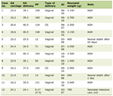
The primary outcome was maternal and neonatal outcome in different LDH levels. Maternal outcomes of this study are placental abruption, eclampsia, FGR, and maternal death. Whereas the neonatal outcomes of this study are LBW, NICU admission, IUFD, and preterm. All outcomes were reported as proportions. Study outcomes are summarized in Table 1 [7–18].
 Click to view | Table 1. Study Characteristics |
Assessment of risk of bias/quality assessment
The Newcastle–Ottawa Scale (NOS) was used to evaluate the methodological quality of the included studies, encompassing case–control and cohort designs. The NOS applies design-specific criteria. For case–control studies, domains included case definition, case representativeness, control selection and definition, group comparability, exposure ascertainment, exposure consistency, and non-response rate. For cohort studies, domains assessed were representativeness, selection of non-exposed groups, exposure ascertainment, demonstration of outcome absence at baseline, comparability, outcome assessment, follow-up length, and adequacy of follow-up. Studies were rated as good quality if they scored 3–4 stars in selection, 1–2 in comparability, and 2–3 in outcome/exposure domains. A fair rating required two stars in selection, 1–2 in comparability, and 2–3 in outcome/exposure. Two reviewers independently evaluated each study, with discrepancies resolved through discussion within the review team.
In this review, two study designs were included; therefore, NOS evaluations were presented separately for each type: case–control studies (Table 2) and cohort studies (Table 3). Overall, the quality assessment indicates a generally low risk of bias across the included studies.
Click to view | Table 2. Results of Study Quality Assessment Using Newcastle–Ottawa Scale (NOS) for Case–Control Study |
Click to view | Table 3. Results of Study Quality Assessment Using Newcastle–Ottawa Scale (NOS) for Cohort Study |
Synthesis of results and statistical analysis
To extract and pool data for quantitative synthesis, Review Manager (RevMan; Cochrane Collaboration, Copenhagen, Denmark) version 5.4 was utilized. Participants were divided into two groups, allowing for comparison between the intervention group (LDH ≥ 600 groups) and the control group (LDH < 600 groups). Statistical analyses for between-group comparisons were conducted using totals and subtotals with 95% confidence intervals (CIs). Missing numerical data were converted from medians to means, and missing standard deviations (SD) were derived from standard errors (SEs). The P-value was also included for each item to show if the results were of significance.
A random effects model was employed in the meta-analyses, as some studies reported primary outcomes using different evaluation or calculation methods. This model provided more equal weighting for each study and assumed the impact would be distributed across populations, facilitating extrapolation to larger sample sizes in future studies. For continuous data, combined effect measures from individual interventions were compared using the inverse variance method, with standardized mean differences (SMDs) as the appropriate effect size. For proportional data, the Mantel–Haenszel method was used, and odds ratios (ORs) were selected as the most suitable effect size.
Heterogeneity across trials was evaluated using the I2 statistic. An I2 value below 25% was considered subtle, 25% to 50% indicated low, 50% to 75% signified moderate, and above 75% implied high heterogeneity. In cases when heterogeneity was observed, sensitivity analyses were performed to investigate the potential causes. A significance level of P-value < 0.05 was applied.
Confidence in cumulative evidence
The confidence in the cumulative body of evidence was assessed using the Grades of Recommendation, Assessment, Development, and Evaluation (GRADE) approach. This system involves a systematic evaluation of the quality of evidence for each outcome of interest. The GRADE system considers factors such as the methodological quality of individual studies (risk of bias), the directness of the evidence to the research question (indirectness), the level of heterogeneity (inconsistency) in the study findings, the precision of effect estimates (imprecision), and the potential for publication bias. Based on these factors, the overall certainty of the evidence was categorized as high, moderate, low, or very low quality.
| Results | ▴Top |
The study selection process is summarized in Figure 1. The initial search yielded 569 records, reduced to 437 after deduplication. Title and abstract screening identified 46 studies for full-text review. Of these, 34 were excluded due to inappropriate outcomes (n = 31), retracted study (1), and duplicated study (2). Twelve studies met the inclusion criteria and were included in the systematic review and eleven studies included in meta-analysis. No unpublished studies meeting the criteria were identified, minimizing potential publication bias.
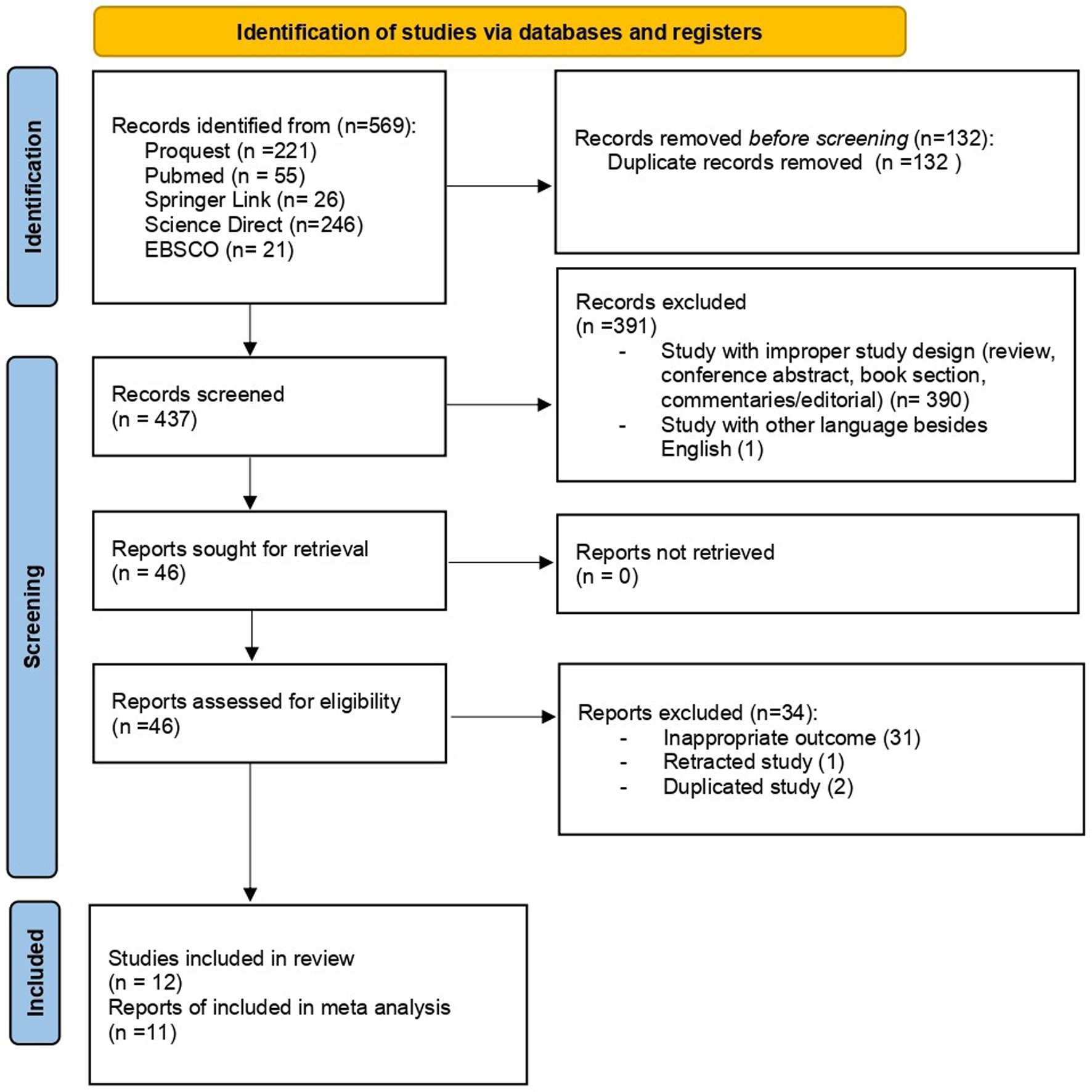 Click for large image | Figure 1. PRISMA 2020 flow diagram of the literature search. |
Characteristics of the included studies
Twelve studies met the inclusion criteria, comprising four cohort studies and eight case–control studies. The characteristics of each included study are summarized in Table 1. All studies compared maternal and neonatal outcomes between two groups based on LDH levels: LDH ≥ 600 IU/L and LDH < 600 IU/L, with the latter serving as the control. Inclusion criteria for the studies required informed consent, gestational age beyond 20 weeks, absence of a prior history of hypertension, and singleton pregnancy. Participants with chronic conditions including essential hypertension, diabetes mellitus, renal disease, hepatic disease, thyroid disorders, or alcohol use were excluded.
Meta-analysis result
As shown in Figure 2, the forest plot demonstrated a significantly higher risk of adverse maternal outcomes among women with LDH ≥ 600 IU/L compared with those with LDH < 600 IU/L. Each outcome was analyzed using a different number of studies, depending on the availability and reporting of specific outcomes across the included research. For placental abruption, the OR is 4.90 (95% CI: 2.86–8.40) showing the overall effect is statistically significant (P < 0.00001) in a homogenous population (I2 = 0%). For eclampsia, the overall effect is also significant (OR = 6.51; 95% CI: 3.36–12.59; P < 0.00001) with homogenous data (I2 = 0%). For FGR, the overall effect is significant (OR = 4.48; 95% CI: 2.16–9.29; P < 0.0001) but with high heterogeneity (I2 = 72%). No significant association was found for maternal death, with homogenous data across studies (OR = 2.47; 95% CI: 0.59–10.25; P = 0.21; I2 = 0%).
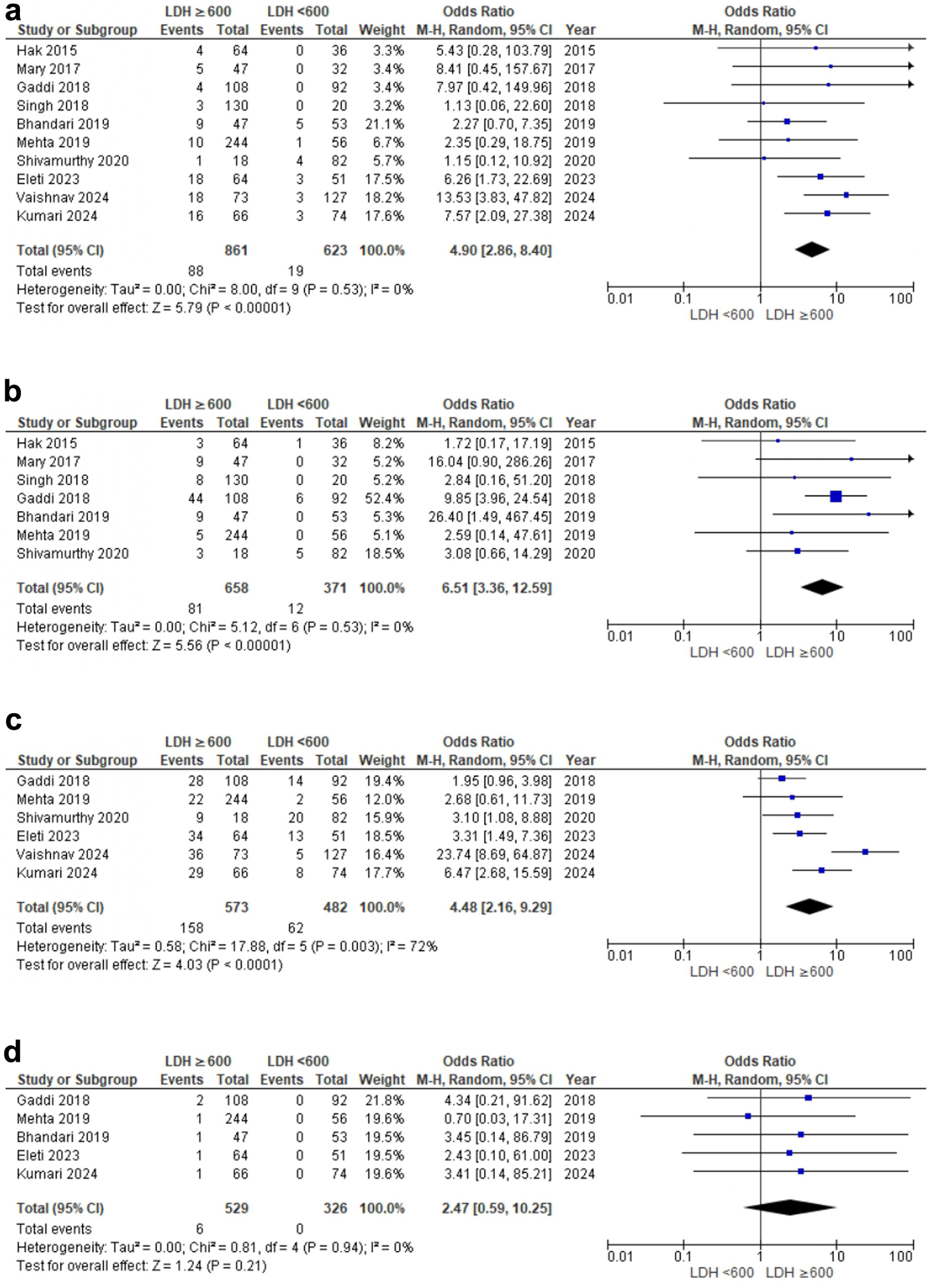 Click for large image | Figure 2. Meta-analysis results (forest plot) for maternal outcomes: (a) placental abruption, (b) eclampsia, (c) FGR, and (d) maternal death in LDH ≥ 600 IU/L compared to control groups. FGR: fetal growth restriction; LDH: lactate dehydrogenase. |
The forest plot presented in Figure 3 revealed that women with LDH ≥ 600 IU/L had a significantly higher risk of adverse neonatal outcomes than those with LDH < 600 IU/L. Each neonatal outcome was analyzed using a different number of studies, depending on data availability across the included research. Elevated LDH levels were significantly associated with an increased incidence of LBW (OR = 2.27; 95% CI: 1.08–4.77; P = 0.03; I2 = 73%), NICU admission (OR = 3.58; 95% CI: 2.12–6.04; P < 0.00001; I2 = 9%), and IUFD (OR = 2.50; 95% CI: 1.21–5.16; P = 0.01; I2 = 0%). No significant association was found in preterm birth (OR = 1.63; 95% CI: 0.88–3.01; P = 0.12; I2 = 53%). Although substantial heterogeneity was observed in the analyses of LBW, the pooled effects remained statistically significant, indicating that higher LDH levels are consistently associated with an increased risk of adverse neonatal outcomes.
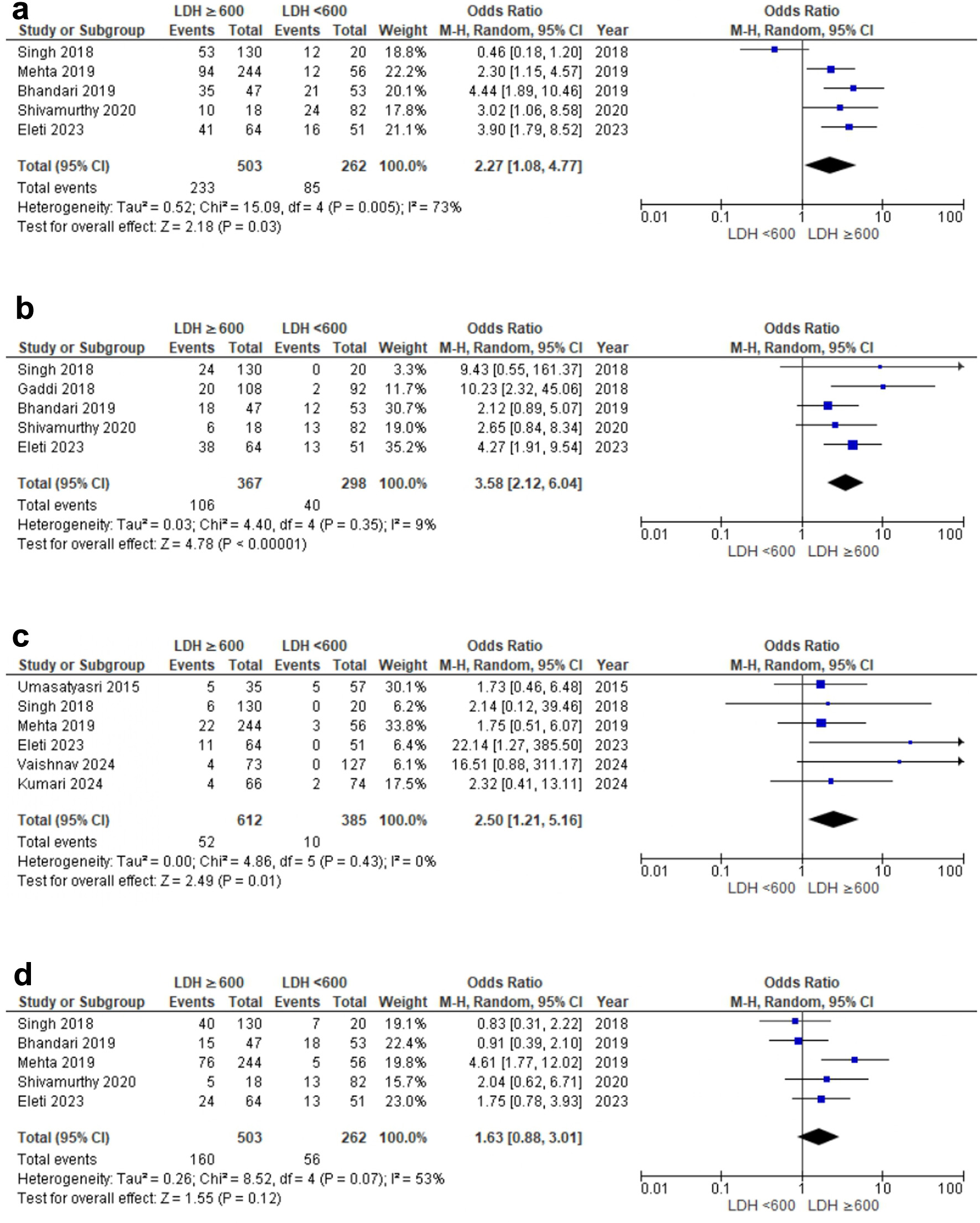 Click for large image | Figure 3. Meta-analysis results (forest plot) for neonatal outcomes: (a) low birth weight, (b) NICU admission, (c) IUFD, and (d) preterm in LDH ≥ 600 IU/L compared to control groups. IUFD: intrauterine fetal death; LDH: lactate dehydrogenase; NICU: neonatal intensive care unit. |
Publication bias
Publication bias was assessed for each outcome using Egger’s regression test for funnel plot asymmetry (Supplementary Materials 3 and 4, jcgo.elmerpub.com). Funnel plots were visually inspected to assess potential small-study effects and publication bias. The funnel plots for placental abruption, eclampsia, NICU admission, and IUFD appeared relatively symmetrical, whereas some degree of asymmetry was observed for FGR, maternal death, LBW, and preterm birth. However, these findings should be interpreted cautiously because the number of studies contributing to each outcome was small (< 10 studies), limiting the reliability of visual assessment of funnel plot asymmetry and interpreting the Egger’s regression test.
Confidence in cumulative evidence
Using the GRADE approach (Table 4), the certainty of evidence linking elevated LDH levels to adverse maternal and neonatal outcomes ranged from low to high. High-certainty evidence supported strong associations with placental abruption with no serious concerns across domains. Moderate-certainty evidence was observed for eclampsia, NICU admission, and IUFD; however, it was downgraded due to imprecision or potential publication bias. Low-certainty evidence supported associations with FGR, maternal death, LBW, and preterm birth, primarily due to imprecision and suspected publication bias. No substantial indirectness was identified across outcomes.
Click to view | Table 4. GRADE Evidence Profile |
| Discussion | ▴Top |
This meta-analysis demonstrates a significant association between elevated LDH levels (≥ 600 IU/L) and adverse maternal and neonatal outcomes. The pathophysiological link between elevated LDH and these complications lies in widespread endothelial dysfunction and cellular injury characteristic of HDP. In preeclampsia, abnormal placentation due to inadequate trophoblastic invasion and incomplete spiral artery remodeling leads to placental ischemia and oxidative stress [19]. The ischemic placenta releases antiangiogenic factors such as soluble fms-like tyrosine kinase-1 (sFlt-1) and soluble endoglin, which disrupt endothelial integrity, promote vasoconstriction, increase vascular permeability, and activate the coagulation cascade [20]. These processes result in microangiopathic hemolysis, tissue hypoxia, and hepatocellular injury, leading to the release of intracellular enzymes such as LDH into the maternal circulation [10, 21].
Hypertension induces arteriosclerosis of small placental arteries, causing ischemia, necrosis, or rupture that may lead to hematoma formation and premature placental separation. This vascular damage contributes to placental abruption, with previous systematic reviews by Chen et al identifying hypertension as a significant risk factor (P = 0.05) [21]. In the study by Dave et al, the majority of eclampsia cases had LDH levels > 800 IU/L; therefore, a significant rise in LDH levels was observed with increasing severity of disease. Similar results were found in a study by Jaiswar et al [22, 23].
These alterations compromise the oxygen and nutrient transfer to the fetus, resulting in restricted growth, preterm delivery, increased NICU admission, and higher perinatal morbidity and mortality [24]. Elevated maternal LDH reflects both systemic endothelial injury and the degree of placental cellular damage, serving as an indirect marker of fetal compromise [10]. Consequently, high maternal LDH levels not only indicate disease severity in the mother but also correlate with adverse neonatal outcomes due to the shared placental pathophysiology between maternal and fetal complications.
High LDH levels often indicate placental dysfunction, leading to reduced nutrient and oxygen delivery to the fetus [7]. Inadequate nutrition due to uteroplacental vascular insufficiency ultimately results in growth retardation [25]. This situation contributes to a higher likelihood of FGR and LBW. Infants with LBW often have underdeveloped organ systems, necessitating careful observation and medical support. As a result, these newborns frequently require admission to the NICU. Consequently, elevated maternal serum LDH levels may serve as an early indicator of adverse perinatal outcomes, such as LBW and an increased risk of NICU admission due to complications like prematurity, respiratory distress, or neonatal hypoxia [7].
Strengths and limitations
A previous meta-analysis by Pergialiotis et al also evaluated serum LDH values in HDP in relation to maternal and neonatal morbidity [26]. The present review builds on that work by incorporating a decade of more recent evidence (2015–2025), applying a standardized LDH cutoff of ≥ 600 IU/L that was commonly used across the included studies, and appraising the certainty of evidence for each outcome using the GRADE approach. Nevertheless, several limitations should be acknowledged. The relatively small number of eligible studies, most of which were conducted in India, may limit the generalizability of the findings. In addition, the inclusion of case–control study designs, which are more susceptible to bias than prospective cohort designs, represents a further limitation of this study.
Future directions
Future research should aim to establish standardized LDH cutoff values and assess their predictive accuracy across varying severities of HDP. Large prospective multicenter studies are needed to validate LDH as a prognostic biomarker and integrate it into existing risk models. Longitudinal studies tracking LDH trends with maternal–fetal outcomes may clarify its temporal role in disease progression, while combining LDH with other biochemical or imaging markers could further improve early detection.
Conclusion
Our findings indicate that elevated maternal LDH levels (≥ 600 IU/L) are significantly associated with an increased risk of adverse maternal and neonatal outcomes in HDP. Elevated LDH reflects the extent of endothelial dysfunction, cellular injury, and placental hypoxia underlying complications such as placental abruption and FGR. Owing to its strong correlation with disease severity, LDH may serve as a valuable, low-cost biochemical marker for early risk stratification and prognostic assessment in preeclamptic pregnancies.
| Supplementary Material | ▴Top |
Suppl 1. PICOTS-SD.
Suppl 2. Search strategy.
Suppl 3. Funnel plot.
Suppl 4. Egger’s regression test.
Acknowledgments
The authors are grateful to all colleagues for all the support and contributions provided.
Financial Disclosure
This study did not receive any specific grant or funding from any agencies or sponsors.
Conflict of Interest
All authors declare that there are no conflicts of interest.
Informed Consent
Not applicable.
Author Contributions
All authors conceived and designed the analysis. TT and BR drafted the protocol, which was then read and approved by all authors. TT, BR, EV, OOL, and GC performed the database searches and extracted the data, which underwent verification by TT. All authors contributed data or analysis tools, followed by a meta-analysis conducted by TT and BR. All authors drafted the manuscript, which was reviewed and approved by all authors for the final version.
Data Availability
The authors declare that data supporting the findings of this study are available within the article.
| References | ▴Top |
- Gestational hypertension and preeclampsia: ACOG practice bulletin, number 222. Obstet Gynecol. 2020;135(6):e237-e260.
doi pubmed - Soundararajan R, Khan T, von Dadelszen P. Pre-eclampsia challenges and care in low and middle-income countries: Understanding diagnosis, management, and health impacts in remote and developing regions. Best Pract Res Clin Obstet Gynaecol. 2024;96:102525.
doi pubmed - Magee LA, Brown MA, Hall DR, Gupte S, Hennessy A, Karumanchi SA, Kenny LC, et al. The 2021 International Society for the Study of Hypertension in Pregnancy classification, diagnosis & management recommendations for international practice. Pregnancy Hypertens. 2022;27:148-169.
doi pubmed - Atluri N, Beyuo TK, Oppong SA, Moyer CA, Lawrence ER. Challenges to diagnosing and managing preeclampsia in a low-resource setting: A qualitative study of obstetric provider perspectives from Ghana. PLOS Glob Public Health. 2023;3(5):e0001790.
doi pubmed - Erez O, Romero R, Jung E, Chaemsaithong P, Bosco M, Suksai M, Gallo DM, et al. Preeclampsia and eclampsia: the conceptual evolution of a syndrome. Am J Obstet Gynecol. 2022;226(2S):S786-S803.
doi pubmed - Teklemariam AB, Abebe EC, Agidew MM, Ayenew AA, Mengistie MA, Baye ND, Muche ZT. Diagnostic performance of lactate dehydrogenase as a potential biomarker in predicting preeclampsia and associated factors. Front Med (Lausanne). 2024;11:1240848.
doi pubmed - Reddy Eleti M, Agrawal M, Dewani D, Goyal N. Serum LDH levels in normotensive and preeclamptic-eclamptic pregnant women and its correlation with fetomaternal outcome. Cureus. 2023;15(4):e37220.
doi pubmed - Kumari N, Bala R, Pahwa S. Lactate dehydrogenase as a biochemical marker for prediction of maternal and perinatal outcomes in hypertensive disorders in pregnancy. Int J Obstet Gynaecol Res. 2024;11(4):600-606.
- Hak J, Nayar-Un-Nisa, Gupta S. LDH levels in pregnancy and its association with severity of the disease and feto-maternal outcome in pre-eclampsia and eclampsia. JK Sci. 2015;17(3):110-113.
- Umasatyasri Y, Vani I, Shamita P. Role of LDH (lactate dehydrogenase) in preeclampsia–eclampsia as a prognostic marker: an observational study. Int Arch Integr Med. 2015;2(9):88-93.
- Mary VP, Chellatamizh M, Padmanaban S. Role of serum LDH in preeclampsia as a prognostic factor - a cross sectional case control study in tertiary care hospital. Int J Reprod Contracept Obstet Gynecol. 2017;6(2):595-598.
- Gaddi M, Katageri G, Mallapur A, Chikkamath S. Lactate dehydrogenase as a biochemical marker for preeclampsia-eclampsia. Med Innov. 2018;7(1):21-25.
- Singh P, Gaikwad HS, Marwah S, Mittal P, Kaur C. Role of serum lactate dehydrogenase in pregnancy induced hypertension with its adverse feto-maternal outcome - a case-control study. J Clin Diagn Res. 2018;12(5):QC19-QC23.
- Mehta M, Parashar M, Kumar R. Serum lactate dehydrogenase: a prognostic factor in pre-eclampsia. Int J Reprod Contracept Obstet Gynecol. 2019;8(7):2792-2796.
- Bhandari N, Gupta A, Kharb S, Chauhan M. Lactate dehydrogenase levels in preeclampsia and its correlation with maternal and perinatal outcome. Int J Reprod Contracept Obstet Gynecol. 2019;8(4):1505-1510.
- Shivamurthy G, Smanjunath N. Study of estimation of serum LDH and uric acid in preeclampsia and its clinical correlation. Int J Reprod Contracept Obstet Gynecol. 2020;9(12):5012-5016.
- Vaishnav C, Mogri S, Vaishnav A. Maternal serum lactate dehydrogenase and its correlation with maternal and fetal outcomes in women with pregnancy induced hypertension - a prospective study. J Cardiovasc Dis Res. 2024;15(9):2134-2147.
- Nasir SK, Khalil RY, Mahmood MB, Dawd AS. Serum lactate dehydrogenase level in preeclampsia and its correlation with disease severity, maternal and perinatal outcomes. BMC Womens Health. 2025;25(1):108.
doi pubmed - Bakrania BA, Spradley FT, Drummond HA, LaMarca B, Ryan MJ, Granger JP. Preeclampsia: linking placental ischemia with maternal endothelial and vascular dysfunction. Compr Physiol. 2020;11(1):1315-1349.
doi pubmed - Gusella A, Martignoni G, Giacometti C. Behind the curtain of abnormal placentation in pre-eclampsia: from molecular mechanisms to histological hallmarks. Int J Mol Sci. 2024;25(14):7886.
doi pubmed - Chen D, Gao X, Yang T, Xin X, Wang G, Wang H, He R, et al. Independent risk factors for placental abruption: a systematic review and meta-analysis. BMC Pregnancy Childbirth. 2025;25(1):351.
doi pubmed - Dave A, Maru L, Jain A. LDH (Lactate Dehydrogenase): a biochemical marker for the prediction of adverse outcomes in pre-eclampsia and eclampsia. J Obstet Gynaecol India. 2016;66(1):23-29.
doi pubmed - Jaiswar SP, Gupta A, Sachan R, Natu SN, Shaili M. Lactic dehydrogenase: a biochemical marker for preeclampsia-eclampsia. J Obstet Gynaecol India. 2011;61(6):645-648.
doi pubmed - Hong J, Kumar S. Circulating biomarkers associated with placental dysfunction and their utility for predicting fetal growth restriction. Clin Sci (Lond). 2023;137(8):579-595.
doi pubmed - Deeksha HS, Pajai S, Reddy Eleti M, Navalihiremath VU. A comprehensive review on serum lactate dehydrogenase (LDH) and uric acid in preeclampsia: implications for maternal health and disease severity. Cureus. 2024;16(3):e56928.
doi pubmed - Pergialiotis V, Panagiotopoulos M, Bellos I, Theodora M, Stavros S, Ntomali E, Papapanagiotou A, et al. Serum LDH values in hypertensive disorders of pregnancy and their association with maternal and neonatal morbidity: A meta-analysis. Int J Clin Pract. 2021;75(12):e14986.
doi pubmed
This article is distributed under the terms of the Creative Commons Attribution 4.0 International License (CC BY 4.0), which permits unrestricted use, distribution, and reproduction in any medium, including commercial use, provided the original work is properly cited.
Journal of Clinical Gynecology and Obstetrics is published by Elmer Press Inc.