

Seasonal Variation in Maternal Vitamin D Levels on Neonatal Outcomes: A Systematic Review
DOI:
https://doi.org/10.14740/jcgo1598Keywords:
Pregnancy, Vitamin D, Infant, Newborn, Seasons, Premature birth, Birth weight, Birth lengthAbstract
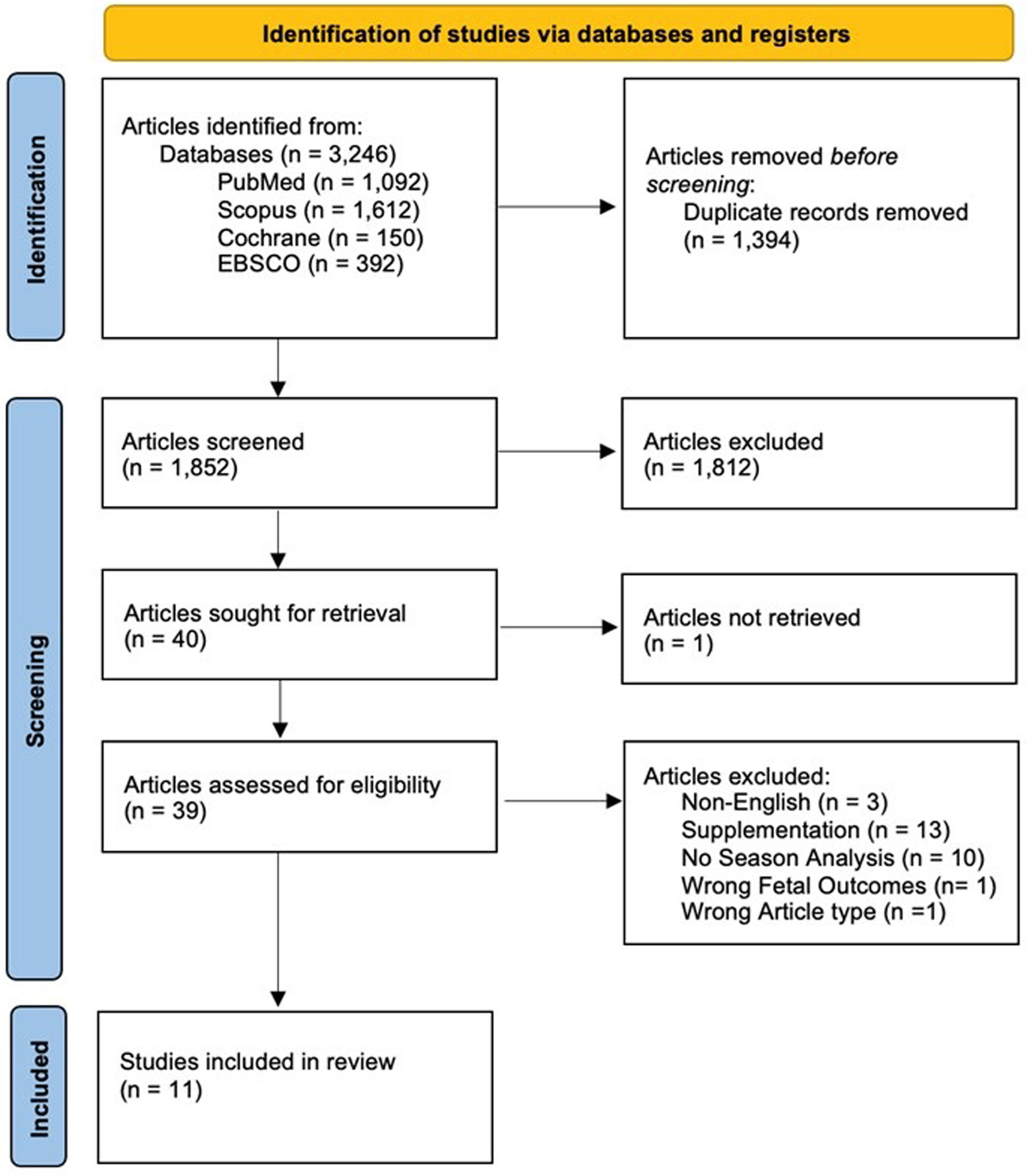
Emerging evidence suggests that inadequate vitamin D levels in pregnant mothers can adversely affect fetal development, pregnancy outcomes, and maternal health. This systematic review analyzes current research to gain a better understanding of the association between seasonal variation in maternal vitamin D levels and differing, potentially adverse, fetal outcomes. A systematic search was conducted across four databases; combinations of keywords and/or MeSH guided the literature search, yielding 1,852 articles that were screened and included if the study focused on seasonal variation in maternal vitamin D levels with associated neonatal outcomes. Full text review was performed by four reviewers on 39 articles, yielding a finalized total of 11 articles. The results of this systematic review supported that, across a vast array of geographic locations, vitamin D levels in pregnant women were, on average, consistently highest during the summer and lowest in the winter. However, the relationships between maternal vitamin D status and select neonatal outcomes including small for gestational age (SGA), preterm birth, and low birth weight were inconsistent. These discrepancies most likely result from external factors including geographic latitude and resulting sun exposure, limited supplementation, cultural conventions, and maternal demographics. Additionally healthcare access and public health policies cannot be overlooked; thus, vitamin D deficiency amongst pregnant women, especially in areas with limited sun exposure, needs to be prioritized and addressed via clinician intervention and public health services and programs, and further research is needed to refine these protocols to reduce global vitamin D deficiency and its associated, potentially adverse, outcomes.
Published
Issue
Section
License
Copyright (c) 2026 The authors

This work is licensed under a Creative Commons Attribution 4.0 International License.