| Journal of Clinical Gynecology and Obstetrics, ISSN 1927-1271 print, 1927-128X online, Open Access |
| Article copyright, the authors; Journal compilation copyright, J Clin Gynecol Obstet and Elmer Press Inc |
| Journal website https://jcgo.elmerpub.com |
Original Article
Volume 15, Number 3, September 2026, pages 97-113

Exploring Traditional Labor Practices: The Efficacy and Safety of Wives’ Tales Methods for Labor Induction and Augmentation
Sydney K. Rismana, e, Saeeda Dhananib, Joseph Novoac, Aman Patela, Krina Patela, Cristina Benitesa, Michelle L. Demoryd, e
aDr. Kiran C. Patel College of Allopathic Medicine, Nova Southeastern University, Fort Lauderdale, FL, USA
bDepartment of General Surgery, HCA Florida Westside and Northwest Hospitals, Plantation, FL, USA
cDepartment of Anesthesiology, UF Health Shands Hospital, Gainesville, FL, USA
dDepartment of Medical Education, Dr. Kiran C. Patel College of Allopathic Medicine, Nova Southeastern University, Fort Lauderdale, FL, USA
eCorresponding Authors: Michelle L. Demory, Department of Medical Education, Dr. Kiran C. Patel College of Allopathic Medicine, Nova Southeastern University, Fort Lauderdale, FL 33328, USA; Sydney Risman, Dr. Kiran C. Patel College of Allopathic Medicine, Nova Southeastern University, Fort Lauderdale, FL 33328, USA
Manuscript submitted September 21, 2025, accepted May 7, 2026, published online September 30, 2026
Short title: Labor Induction: Wives’ Tales
doi: https://doi.org/10.14740/jcgo1556
| Abstract | ▴Top |
Background: Traditional methods for labor induction and augmentation, referred to as “wives’ tales,” are commonly used to hasten and ease labor. Popular approaches include acupuncture and acupressure, breast or nipple stimulation, castor oil, date fruit, exercise, membrane sweeping, primrose oil, sexual activity, pineapple, raspberry leaf tea, and spicy foods. Evidence regarding their efficacy and safety is limited and inconsistent.
Methods: A scoping review of available literature was conducted, examining natural techniques for labor induction and augmentation. Electronic databases, including Embase, OVID Medline, Web of Science, and CINAHL, were utilized to ensure a thorough and varied collection of peer-reviewed articles. A structured search was performed, and all articles were screened for eligibility by five researchers. Data collection on the 59 final studies was performed, noting primary outcomes of labor initiation and duration as well as secondary outcomes, such as cervical change, delivery mode, and maternal and neonatal outcomes.
Results: Among the methods reviewed, membrane sweeping, primrose oil, date fruit, and yoga demonstrated the most consistent benefits. Membrane sweeping increased spontaneous labor within 72 h and reduced the need for further induction methods. Primrose oil improved cervical ripening and shortened the first stage of labor. Exercise, especially yoga, decreased first stage duration and was associated with higher rates of vaginal delivery. In contrast, acupuncture and acupressure, breast or nipple stimulation, castor oil, and sexual intercourse showed inconsistent effects. No significant adverse maternal or neonatal outcomes were consistently reported among low-risk patients. There were no eligible studies found for pineapple, raspberry leaf tea, or spicy foods.
Conclusions: Some traditional labor augmentation methods, including membrane sweeping, primrose oil, date fruit, and exercise, demonstrated potential benefits in initiating and shortening labor in low-risk patients without significant adverse effects reported. However, the overall evidence remains limited and heterogeneous due to inconsistent methodology. These interventions should not replace evidence-based obstetrical management, but physicians may consider discussing select methods with interested patients as a part of shared decision-making and patient education. Further, high-quality, standardized studies are needed to better establish efficacy and safety and to guide evidence-based recommendations for labor induction and augmentation.
Keywords: Labor; Labor induction; Labor augmentation; Wives’ tales; Obstetrics; Membrane sweeping; Primrose oil; Date fruit
| Introduction | ▴Top |
Induction and augmentation of labor are important components of modern obstetric care. Labor augmentation is the process of stimulating uterine contractions after the onset of spontaneous labor. The goal is to increase intensity and frequency of contractions to promote cervical dilation, reduce labor duration, and avoid complications associated with prolonged labor [1]. Augmentation of labor is frequently performed to treat delayed labor, commonly caused by failure of the cervix to dilate and efface. There are many modern approaches to modifying labor that clinicians can utilize, ranging from pharmacologic interventions, like oxytocin and prostaglandins, to mechanical methods, such as balloon catheters.
The desire to shorten or ease labor is not new, as people have been trying various methods for centuries. Induction of labor (IOL) dates back to the Egyptian era and many traditional practices, or “wives’ tales,” have been passed down within communities for generations [2]. These interventions include herbal and dietary methods, such as evening primrose oil, red raspberry leaf tea, pineapple, dates, and castor oil, as well as physical activities, including walking, exercise, and sexual intercourse. Other commonly used techniques include nipple stimulation, acupuncture, and membrane sweeping. Despite these traditional practices being well-known, physicians are often unable to recommend these methods, because the current evidence regarding their efficacy and safety is limited and inconsistent. Consequently, both patients and clinicians face uncertainty regarding the overall effectiveness of these widely known natural interventions.
In this scoping review, we aim to conduct a thorough investigation of existing literature with the primary objective of examining the efficacy of the various traditional interventions used in labor induction and augmentation. We also discuss the safety of these interventions and address key questions concerning their impact on labor outcomes and maternal and neonatal health. By reviewing evidence from a large range of studies, we try to determine the underlying mechanisms behind these methods and assess their potential clinical applications. Through this comprehensive analysis, we strive to provide insights that inform evidence-based decision-making in labor induction.
| Methods | ▴Top |
The objective of this scoping review was to examine traditional “wives’ tales” methods for augmenting labor and the effects they have on pregnancy outcomes. We conducted a scoping review of relevant literature using electronic databases, including Embase, OVID Medline, Web of Science, and CINAHL. These databases were chosen to ensure a thorough and varied collection of peer-reviewed articles that are in line with the parameters of this study. The search was conducted by employing a set of terms including “induction of labor,” “cervical ripening,” and “stimulate labor.” Additionally, terms utilized to search for common “wives’ tales” methods included “primrose oil,” “nipple stimulation,” and “acupuncture.” A complete list of search terms is included in Supplementary Material 1 (jcgo.elmerpub.com).
Inclusion and exclusion criteria
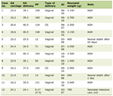
Our inclusion and exclusion criteria are found in Table 1. Pregnant patients of any age and any number of gravida and para were included in the study. Studies were included if they discussed wives’ tales methods in regard to augmentation of labor. Augmentation of labor was defined as time to onset of labor, duration of stages of labor, or cervical change in relation to these methods.
 Click to view | Table 1. Inclusion and Exclusion Criteria |
Study selection
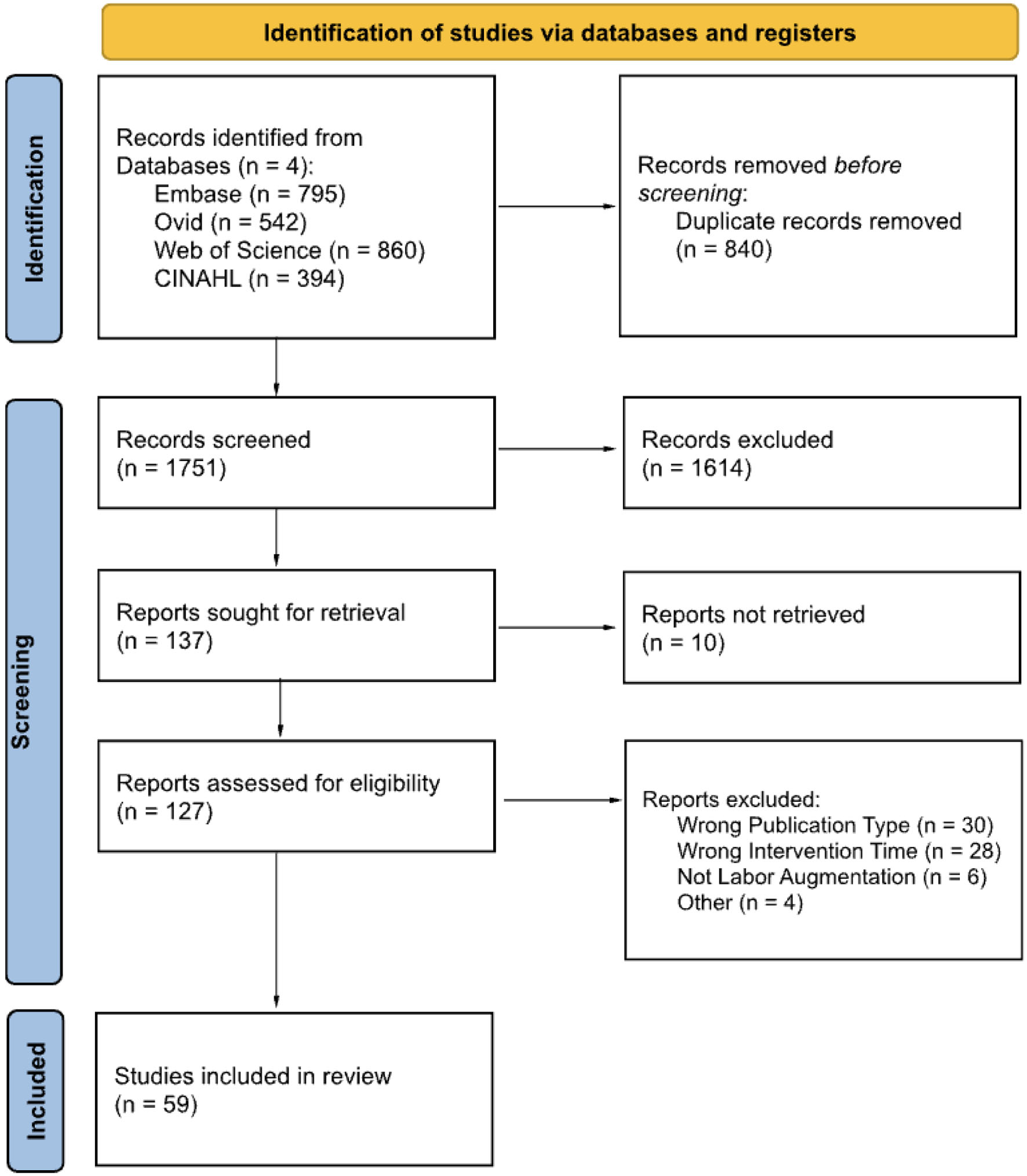
After completing the initial search, duplicates were removed via Rayyan.ai, and articles were screened in a three-step process. First, titles and abstracts were evaluated for relevance using Rayyan.ai. Articles without clear exclusion criteria were selected for full-text review, conducted independently by five researchers, with discrepancies resolved by consensus or a sixth reviewer. In the second screening, the full texts were independently reviewed by two researchers (SR and SD), requiring both reviewers’ approval before proceeding. Out of 1,751 studies, 59 met criteria and underwent quantitative and qualitative data extraction. The selection process followed the Preferred Reporting Items for Systematic Reviews and Meta-Analyses (PRISMA) guidelines, displayed in Figure 1 [3].
 Click for large image | Figure 1. PRISMA diagram. Adapted from Ref. [3]. |
Primary outcomes were the effects of traditional labor augmentation methods on labor initiation and timing. Labor initiation was defined as the rate of spontaneous labor or the need for medical induction methods. Timing was defined as either the interval from intervention to labor onset or from intervention to delivery. Secondary outcomes included cervical change, delivery mode, and labor duration. Methods studied included primrose oil, spicy food, sexual intercourse/activity, exercise/walking, nipple stimulation, red raspberry leaf tea, pineapple, castor oil, dates, acupuncture or pressure, and membrane sweeping. Outcomes were measured based on the reported clinical data and self-reported measures from participants. As this study analyzed previously published literature, ethical approval was not required, and all data adhered to the ethical guidelines of the original authors.
Data appraisal
The 59 final articles that were selected from the full-text review were evaluated for bias risk and method quality using the Joanna Briggs Institute (JBI) Critical Appraisal Tools [4]. Three were evaluated as analytical cross-sectional studies, one as a case-control study, one as a case series, eight as cohort studies, one as a prevalence study, three as quasi-experimental studies, and 42 as randomized control trials. Studies were included if they had a high appraisal rating, defined as a score of ≥ 60% on the study type-specific JBI critical appraisal checklist. All 59 articles were determined to have a low risk of bias and were included in final data analysis. The final results of the JBI critical appraisal are included in Supplementary Material 2 (jcgo.elmerpub.com).
IRB approval
As this study is a systematic review of previously published data, institutional review board approval was not required.
Ethical compliance with human/animal study
This study is a systematic review including only previously published studies. No new studies with human or animal participants were conducted. All included studies were conducted in accordance with the ethical standards of their respective institutions as well as with the Helsinki Declaration.
| Results | ▴Top |
Search results
A systematic search of the available literature was completed using four electronic databases: Embase, OVID Medline, Web of Science, and CINAHL. A total number of 2,591 studies were found. After removing 840 duplicates, 1,751 studies were screened. Figure 1 outlines the PRISMA flow diagram with designated reasons for exclusion. After reviewing the abstracts using the criteria in Table 1, an additional 1,164 articles were excluded. Out of 127 articles retrieved and assessed for eligibility, 59 articles remained. Out of 59 total studies, there were 19 acupuncture/massage therapy papers, one nipple stimulation paper, six castor oil papers, two dates papers, 12 exercise papers, four membrane sweeping papers, eight primrose oil papers, and seven sexual intercourse papers. Out of 11 “wives’ tales” labor augmentation methods, three of these methods had zero relevant articles: pineapple, raspberry leaf tea, and spicy food.
Acupuncture or massage therapy
Nineteen studies assessed the effectiveness of acupuncture and acupressure techniques for labor induction in term pregnancies, noted in Table 2 [5–23]. Control groups received either “sham treatments” or standard care. Primary outcomes focused on labor induction and timing. Initiation of labor was defined as either the rate of spontaneous labor or the need for pharmacological or mechanical IOL. Of 11 studies investigating spontaneous labor rates [5–7, 11, 12, 16, 17, 19–21, 23], only three studies reported differences favoring acupuncture or acupressure [6, 19, 21]. None of the six studies evaluating the need for labor induction noted a significant difference between experimental and control groups [8–10, 13–15]. In a study evaluating electrostimulation acupuncture, the eight study participants went into labor without other labor induction methods [8].
Click to view | Table 2. Acupuncture & Acupressure for Induction of Labor |
Timing of labor was measured as the interval from intervention to either labor onset or delivery. Six studies assessed the interval to delivery, with five reporting no significant difference [5, 7, 9, 12, 13, 23]. Koh et al (2019) reported that the time from intervention to labor onset was longer in those receiving complementary and alternative medicine (CAM) treatment (acupressure/reflexology) compared to those receiving standard care. Three studies documented the interval to labor onset; Gregson et al (2015) and Teimoori et al (2014) found no change, while Koh et al (2019) reported a longer interval in those receiving CAM treatment compared to standard care.
Secondary outcomes included in Table 2 are cervical change or Bishop score, labor duration, and delivery method. Six studies investigated the labor duration and length of labor stages [9, 11, 13, 15, 16, 21]. Three studies reported no significant difference in mean labor length or in the duration of each labor stage [9, 16, 21]. However, both Koh et al (2019) and Gribel et al (2011) noted a longer labor duration in patients receiving electroacupuncture and CAM treatment, respectively. McCullough et al (2017) found that antenatal reflexology significantly reduced the duration of the second stage of labor. Eleven studies examined the mode of delivery [5–7, 10–12, 15, 17, 19, 21, 22]; six articles described no significant difference in vaginal delivery rates [5, 10, 15, 17, 21, 22], while Alsharnoubi et al (2015) and Gribel et al (2011) demonstrated a significantly increased rate of normal vaginal deliveries in the experimental group. Three papers assessed cesarean section rates and found no difference between patients receiving acupressure/acupuncture and those receiving standard care [7, 12, 19].
Breast or nipple stimulation
Only one study on breast or nipple stimulation for labor augmentation met inclusion criteria [24]. The authors reported that breast stimulation led to significant change in Bishop’s score after 1 week, from 3.02 to 6.08 in the intervention group (IG) compared to 3.12 to 3.9 in control group (CG) (P < 0.0001) [24]. Average gestational age at delivery was slightly lower in the IG (39.2 ± 2.8 weeks) than in CG (39.5 ± 2.3 weeks) (P = 0.044). Additionally, vaginal delivery rates were higher in the IG (P = 0.046). In regard to the timing of labor, there was no difference in the time to onset of labor or duration of labor between the two groups.
Castor oil
Six studies evaluating castor oil as a method to induce labor were included (Table 3) [25–30]. The primary outcome of labor initiation was defined as spontaneous labor or the need for pharmacological or mechanical induction. The incidence of spontaneous labor was described by Azhari et al (2006) to be significantly greater in pregnant women who took oral castor oil. DeMaria et al (2018) found that 54.2% of pregnant women who consumed castor oil went into spontaneous labor with a greater effect in the primiparous patients. Of three studies investigating the need for induction, only Neri et al (2018) noted a decreased requirement for prostaglandin administration in patients who consumed castor oil [26, 27, 30]. An article by Boel et al (2009) reported that induction with oxytocin or misoprostol led to 92.7% spontaneous deliveries within 24 h, significantly faster than with castor oil.
Click to view | Table 3. Castor Oil for Induction of Labor |
Four studies assessed the timing of labor, defined as delivery within 24 h of intervention [26, 27, 29, 30]. Both Bayoumi et al (2022) and Neri et al (2018) noted a significant reduction in the duration of labor while Boel et al (2009) and Gilad et al (2018) did not. When adjusted for parity, Gilad et al (2018) noted no change in labor onset in primiparous patients (IG: 22.2%, CG: 38.5%, P = 0.78), but there was a shorter time to labor onset in multiparous patients (IG: 60%, CG: 29.4%, P = 0.02). Conversely, Bayoumi et al (2022) reported that a higher proportion delivered within 24 h regardless of parity status. Neri et al (2018) reported a 47.5% onset within 24 h without a control comparison.
Secondary outcomes included gestational age, labor duration, and delivery method. Bayoumi et al (2022) reported earlier gestational age after castor oil use, but Gilad et al (2018) and Neri et al (2018) did not describe a significant difference. Duration of the first and second stages of labor was unchanged in the study by Bayoumi et al (2022). Meanwhile, DeMaria et al (2018) found that all stages of labor were shorter after castor oil consumption in multiparous women only. Of six articles investigating delivery type [25–31], two found a significant increase in vaginal delivery rates and decrease in cesarean section rates [28, 30]. DeMaria et al (2018) reported that this effect was more pronounced in multiparous women.
Dates
Two studies examining date fruit and labor augmentation were included [31, 32]. Both reported a significantly lower need for labor induction among date-consuming patients, though only Al-Kuran et al (2011) found higher spontaneous labor rates. Razali et al (2017) also described reduced oxytocin use for augmentation and measured time to labor onset, finding a significantly shorter interval in the date-consuming group. Neither study reported a difference in gestational age at admission. Al-Kuran et al (2011) noted a 38% shorter latent stage of labor with date consumption, but neither study found a difference in the overall duration of the first and second stages. Findings on cervical change were inconsistent with Al-Kuran et al (2011) observing greater cervical dilation but Razali et al (2017) finding no difference. Both studies reported no differences in cesarean section rates.
Exercise
This review examined 12 studies on the impact of various exercise programs, such as aerobic exercise, yoga, Pilates, and walking, on labor outcomes (Table 4) [33–44]. Programs were supervised from the second trimester until delivery, with controls receiving standard prenatal care. The primary outcome was labor initiation, defined as the rate of spontaneous labor or need for induction. Of eight studies that evaluated this primary outcome [33, 35, 36, 38, 39, 41, 42, 44], four reported a reduced need for other induction methods [35, 36, 41, 44], while the other four studies noted no difference [33, 38, 39, 42].
Click to view | Table 4. Physical Activity for Induction of Labor |
Secondary outcomes included labor duration and mode of delivery. Only Bolanthakodi et al (2018) assessed total labor duration, reporting that yoga shortened the time from labor to delivery. Three yoga studies reported a significant reduction in the first stage of labor [35, 39, 43]. Three articles about general exercise also described a shorter first stage [34, 40, 42], whereas Baena-Garcia et al (2023) found no effect. Focusing on the active phase, three studies noted no difference in duration [36, 37, 41], but Haakstad et al (2020) reported a significant reduction with aerobic exercise. Eight studies found no change in the second stage overall duration [33–38, 40, 44]; however, two yoga studies reported a decrease [39, 42]. Regarding delivery mode, six aerobic exercise studies and one Pilates study found no difference in vaginal or cesarean delivery rates. Conversely, two yoga studies by Rong et al (2021) and Bolanthakodi et al (2018) reported more vaginal deliveries and fewer cesareans, while Maharana et al (2013) observed no difference.
Membrane sweeping
Four studies evaluated membrane sweeping for labor induction (Table 5) [45–48]. The primary outcome was the rate of spontaneous labor. Ali et al (2021) found membrane sweeping to be 88.33% effective at inducing spontaneous labor without requiring additional labor induction methods. This result was consistent across age and parity, but nulliparous women required more sweeps to induce labor. This study was conducted without a control group; thus no direct comparison can be made [45]. Hassan (2023) reported an average of 1.63 sweeps to induce labor. Both Butt et al (2021) and Ugwu et al (2014) found higher spontaneous labor rates with membrane sweeping, though the result was not statistically significant in Butt et al (2021). Ugwu et al (2014) further noted a greater need for misoprostol or oxytocin in patients not receiving membrane sweeping.
Click to view | Table 5. Membrane Sweeping for Induction of Labor |
Timing of labor was also assessed. Ugwu et al (2014) reported more frequent labor onset within 72 h and a 3-day shorter interval to delivery after membrane sweeping. Hassan (2023) specifically evaluated the number of sweeps required to stimulate induction and found that 41.5% delivered within 24 h and 53.7% within 1 week after the intervention. In terms of mode of delivery, there was no variation in the rate of vaginal deliveries versus cesarean deliveries [46, 48]. Hassan (2023) found higher vaginal delivery rates in multiparous women only. Ugwu et al (2014) observed no difference in active labor duration (IG: 10.4 ± 5.7 h, CG: 10.3 ± 2.8 h, P = 0.92). None of the studies evaluated cervical change or Bishop score improvement.
Primrose oil
The main findings of the eight final articles on primrose oil and labor augmentation are summarized in Table 6 [49–56]. The primary outcome was change in Bishop score after vaginal or oral primrose administration. All six studies using vaginal primrose oil reported a significant Bishop score improvement [49–51, 53, 55, 56]. Shahraki et al (2023) noted that the change in Bishop score was greater with vaginal primrose oil even when compared to misoprostol. Additionally, Diansuy & Aguilar (2017) indicated an increase in cervical dilation, effacement, and consistency change. Oral primrose oil alone, however, produced no significant Bishop score improvement [54]. Heydari et al (2022) and Poor et al (2023) found no significant difference in Bishop score when comparing patients taking oral versus vaginal primrose oil.
Click to view | Table 6. Primrose Oil for Induction of Labor |
Secondary outcomes included labor initiation, duration, timing, and cesarean rate. Of three studies evaluating labor initiation [49, 53, 56], only Ariana et al (2024) reported a significant reduction in the need for additional induction methods after using primrose oil. Five articles examined labor duration [49, 50, 52, 53, 55]. Both Azad et al (2022) and Ariana et al (2024) noted a shorter latent phase with vaginal primrose oil, but only Ariana et al (2024) noted a shorter active phase. Overall, Poor et al (2023) described a shorter first stage with either route. The impact of primrose oil on the length of the second stage of labor is unclear. Both Heydari et al (2022) and Poor et al (2023) described a decreased second stage duration; however, Azad et al (2022) and Hashemnejad et al (2019) did not.
Regarding intervention to labor time, two studies found no difference in time from intervention to labor onset [52, 56], while Poor et al (2023) reported the median time from intervention to contraction onset to be significantly shorter after vaginal or oral primrose oil administration. Out of four studies addressing mode of delivery [50, 53, 55, 56], only Shahraki et al (2023) found a lower cesarean rate after vaginal primrose oil use.
Sexual intercourse/activity
Our review identified seven studies investigating sexual intercourse and its effect on labor induction augmentation (Table 7) [57–63]. The primary outcome, labor initiation, was defined as either spontaneous labor or the need for additional induction methods. Of four studies evaluating spontaneous labor rates, all found no difference between sexually active and abstinent patients [58, 59, 62, 63]. Incidence of orgasm did not change rates of spontaneous labor [63]. Four studies reported no reduction in the need for other pharmacologic or mechanical inductions methods after sexual activity [58–61]. Even after adjusting for intercourse frequency, Tan et al (2006) still found no difference in induction rates for post-dates pregnancies.
Click to view | Table 7. Sexual Intercourse for Induction of Labor |
Additional outcomes of interest included labor timing, gestational age, cesarean rates, Bishop score, and labor duration. The effect of intercourse on the duration of delivery was inconclusive. Unexpectedly, Tan et al (2009) reported a 2-day longer interval from intervention to admission for labor and Schaffir (2006) noted a 1-week delay. Conversely, Omar et al (2013) and Tan et al (2007) found no difference in duration from intercourse to delivery. Most studies found no difference in gestational age at delivery; however, Atrian et al (2015) and Tan et al (2006) reported deliveries at slightly earlier gestations among sexually active women, while Schaffir (2006) reported later deliveries. Of six studies describing mode of delivery [57–60, 62, 63], only Foumane et al (2014) described a reduced incidence of cesarean section in sexually active patients. Atrian et al (2015) noted that semen exposure did not affect delivery mode. Three studies investigating Bishop scores at admission found no significant difference [60, 62, 63]. Two studies examined labor duration [58, 60]. Foumane et al (2014) reported shorter active phase and second stage labor in sexually active patients, while Schaffir (2006) found no difference.
Other labor augmentation methods
After abstract and full-article screens, three induction method topics of interest included zero relevant studies: pineapple, raspberry leaf tea, and spicy food. Despite additional search methods utilized to find pertinent studies, no further articles matching the inclusion and exclusion criteria could be found.
| Discussion | ▴Top |
Main findings
Our scoping review of 59 studies examined traditional “wives’ tales” methods for labor augmentation and their effects on labor outcomes and maternal and neonatal health. Methods reviewed included acupuncture/acupressure, breast/nipple stimulation, castor oil, date fruit, exercise, membrane sweeping, primrose oil, and sexual activity. Four of these methods appear to have greater efficacy in labor augmentation, including membrane sweeping, primrose oil, date fruit, and exercise, more specifically yoga. Membrane sweeping effectively initiates labor and reduces the need for medical induction without increasing adverse outcomes. Primrose oil may aid in cervical ripening and shorten labor. Exercise, especially yoga, may reduce first stage duration though overall delivery outcomes remain inconsistent. Date fruit consumption may increase spontaneous labor and reduce the need for medical induction. The studies on acupressure/acupuncture, breast stimulation, castor oil, and sexual activity do not suggest a significant impact on labor augmentation, despite their theoretical benefits. While some traditional methods appear beneficial, the evidence remains inconclusive, highlighting the need for further research.
Interpretation
The shift towards natural labor methods is partly due to the perceived risks of mechanical and pharmacological induction. Acupressure and acupuncture have been explored as alternative approaches, thought to stimulate uterine contractions by targeting receptors like SP6, LI4, and BL67 to increase oxytocin release and parasympathetic activity [7]. This scoping review included 19 studies using various techniques, including manual and laser acupuncture, electroacupuncture, acupressure, and reflexology. Eight of 11 studies found no increase in spontaneous labor (Table 2) [5, 7, 11, 12, 16, 17, 20, 23], and five of six reported no reduction in the need for pharmacologic induction [9, 13–15, 18]. There was also no significant change in secondary outcomes, including labor duration, cervical change, and delivery mode. Side effects associated with these methods were generally mild, such as localized pain, bruising, or dizziness. Rare cases of excessive contractions and fetal distress were reported [18].
Breast stimulation through nipple massage or pumping is a proposed non-pharmacological method to induce labor by increasing oxytocin release and triggering uterine contractions [64]. The only study meeting inclusion criteria found that women performing breast stimulation three times daily beginning at 38 weeks had higher Bishop scores, delivered at earlier gestational ages, and had a higher rate of vaginal deliveries [24]. There was no effect on labor duration. Breast stimulation during pregnancy is widely regarded as safe in low-risk women; however, safety is unclear in high-risk groups, including those with prior cesareans, multiple gestations, or polyhydramnios [64]. With limited data, the true effectiveness of breast and nipple stimulation is unknown and requires further research.
Historically, castor oil has been used as a natural alternative to oxytocin for labor induction [28]. Its mechanism is unclear; however, it is theorized that the byproduct ricinoleic acid increases prostaglandin production, promoting uterine contractions and cervical ripening [65]. The six studies examining the role of castor oil in the IOL had mixed results regarding efficacy. Two studies found no effect, while Azhari et al (2006) and Neri et al (2018) reported increased spontaneous labor rates and higher pharmacological induction rates, respectively. There was also no change in the duration of labor after castor oil consumption [27, 29]. Although Bayoumi et al (2022) reported an earlier gestational age at delivery in the castor oil group, this was not consistently supported by the other two studies by Gilad et al (2018) and Neri et al (2018). Only two studies described an increased rate of vaginal deliveries amongst castor oil users [28, 30]. While no serious adverse effects were noted, nausea and vomiting were common [66, 67]. Overall, castor oil appears safe but lacks consistent evidence of benefit for labor induction with inconclusive effects on labor duration and delivery outcomes.
Date fruit, Phoenix dactylifera, has been anecdotally thought to support a healthy pregnancy by preventing anemia, reducing nausea, stabilizing blood pressure and blood sugar, and potentially augmenting labor [31]. In addition to being rich in carbohydrates, proteins, fats, and essential vitamins, it is speculated that it modulates oxytocin receptors, causing the uterus to respond more readily to oxytocin, enhancing uterine contractions [32]. The two studies included in this review suggest that date consumption in the third trimester increases spontaneous labor and reduces the need for oxytocin induction. While Al-Kuran et al (2011) noted a shorter time to labor and a reduced latent phase after date consumption, Razali et al (2017) did not confirm these findings. Effects on cervical change were also inconclusive, but cesarean rates were noted to not be significantly different. Adverse effects were minimal, with both studies reporting no major side effects. Thus, incorporating date fruit into the diet of pregnant patients during late pregnancy appears to be safe and potentially beneficial for labor management, though more studies are required to confirm these results.
Although regular physical exercise benefits overall health, its effects on labor induction are unclear. Twelve studies evaluated aerobics, yoga, Pilates, and walking on labor outcomes [33–44]. Although there was no consensus regarding the need for other labor induction methods after exercise, most of the studies reported that exercise in the third trimester significantly reduced first stage duration with this beneficial effect more consistently observed with yoga. Although results regarding the second stage duration were variable in those doing aerobic exercise and Pilates during pregnancies, yoga appeared to significantly reduce the time from complete dilation to delivery [39, 43]. In assessing delivery mode, yoga and walking were associated with higher rates of vaginal delivery and lower cesarean section rates, whereas Pilates and aerobic exercise showed no significant effect. The changes associated with exercise may be attributed to improved maternal circulation, which enhances intervillous space vascularity contributing to improved placental function [68]. Additionally, exercise may modify fetal gene expression, enhancing nutrient transport [33]. Combined with good nutrition, exercise can support neonatal health and reduce macrosomia risk. It is, however, worth noting that excessive intensity or frequency may decrease placental size and increase risk of low birth weight [33]. Moderate-intensity exercise can safely maximize maternal and fetal health benefits.
Separation of the fetal membranes from the cervix by digital pressure, a technique known as membrane sweeping, is widely used to induce labor and prevent post-term pregnancies. This method stimulates labor by releasing endogenous prostaglandins, which soften the cervix and induce uterine contractions via oxytocin [45]. Spontaneous labor rates are significantly higher after membrane sweeping, with labor often starting within 72 h of the intervention. This technique also reduces the need for further augmentation with oxytocin [48]. Most patients require only one or two sweeps, though nulliparous women more often need repeated sweeps. Membrane sweeping does not significantly alter vaginal delivery or cesarean rates. Evidence from four studies suggests that membrane sweeping is an effective and safe method for inducing spontaneous labor regardless of age or parity. There is no evidence that membrane sweeping increases risk of adverse maternal or neonatal outcomes [45]. The method may even improve fetal outcomes, as it reduces risk of prolonged pregnancies beyond 43 weeks which carry higher perinatal mortality.
Evening primrose oil is commonly used to ease labor and promote cervical ripening. Its component, gamma-linolenic acid (GLA), stimulates prostaglandin production, softening and dilating the cervix [51, 55]. Vaginal administration allows for direct cervical absorption, while oral intake produces systemic effects that may be delayed. Eight studies evaluated both routes, with seven reporting significant improvements in Bishop scores, including increased cervical dilation, effacement, and consistency. Evidence is inconclusive on whether oral or vaginal administration is superior. Findings on timing of labor onset and second stage duration were inconclusive, but the latent phase and first stage of labor were consistently shorter [49, 50, 55]. No significant reduction in cesarean section rate was observed. Adverse effects, such as nausea, diarrhea, and uterine hyperstimulation, were rare and did not substantially affect labor outcomes [53, 55]. Overall, primrose oil appears to have a good safety profile and is effective for cervical ripening and labor induction in low-risk, term patients.
Sexual intercourse is believed to trigger uterine contractions, potentially influencing labor through prostaglandins in semen, oxytocin release during orgasm, and increased pelvic blood flow. However, the clinical impact of sexual activity on labor augmentation is unclear. Four studies observed no significant difference in spontaneous labor rate with increased intercourse frequency [58, 59, 62, 63]. Four studies also noted no difference in need for additional labor induction [58–61]. The effect of sexual intercourse on the timing of labor and gestational age was inconsistent. Delivery mode and Bishop score were largely unaffected. No adverse maternal or fetal outcomes were reported in the studies. Sexual activity in the third trimester appears safe in low-risk patients but does not consistently promote labor.
Three additional topics yielded zero relevant studies: pineapple, raspberry leaf tea, and spicy foods. While these therapies are often promoted as natural labor stimulants, there is a lack of scientific evidence to substantiate their effectiveness. Bromelain in pineapple is believed to soften the cervix [69]. Raspberry leaf tea may enhance uterine contractions through its effects on smooth muscle [70]. There is no proposed mechanism for spicy foods triggering labor. Despite the prevalence of these techniques in non-scientific materials, evidence-based research on these topics is scarce, highlighting the need for further investigation into their efficacy.
Strengths and limitations
This scoping review is the only publication known to the authors to date that investigates and compares a variety of wives’ tales methods of augmenting labor, rather than a single method. Despite the review providing a comprehensive evaluation of various traditional and alternative methods of labor induction, this study has some notable limitations. For some topics, such as acupressure/acupuncture, different techniques and protocols were utilized, complicating the standardization and comparison of these interventions. Some methods, such as sexual activity, are also difficult to standardize because they rely on patient-reported behaviors. Additionally, outcome definitions and measures varied considerably between studies, further limiting direct comparisons across interventions. For some topics, there were very few eligible articles, while other methods, such as pineapple, raspberry leaf tea, and spicy foods, lacked studies entirely. This variability in both study quantity and methodology hinders the ability to draw definitive conclusions regarding efficacy and safety. Although multiple studies existed for certain interventions, a meta-analysis was not performed due to substantial heterogeneity in study design, intervention protocols, and reported outcomes. Furthermore, publication bias was not formally assessed. These limitations emphasize the need for more rigorous, standardized research to better assess the efficacy and safety of these methods labor augmentation.
Conclusion
This comprehensive scoping review covers a variety of alternative methods for labor augmentation, highlighting the potential benefits of techniques such as membrane sweeping, primrose oil, date fruit, and exercise, particularly yoga. Some of these methods offer promising results, such as membrane sweeping for spontaneous labor and primrose oil for cervical ripening. However, the strength and consistency of evidence varied considerably among interventions, limiting the ability to make definitive clinical recommendations. At this time, these methods should not be considered replacements for evidence-based obstetric management. However, for low-risk patients without significant maternal-fetal comorbidities who express interest in alternative methods of labor augmentation, clinicians may consider discussing interventions with low-risk safety profiles as part of shared decision-making and patient education. Counseling should include the current limitations of the evidence, the lack of standardization for many methods, and the importance of ongoing obstetric monitoring.
The limited and inconsistent findings underscore the need for further rigorous and standardized research to better establish the efficacy and safety of these practices.
| Supplementary Material | ▴Top |
Suppl 1. Complete list of search terms.
Suppl 2. Final results of the JBI critical appraisal.
Acknowledgments
The authors have no acknowledgements to declare.
Financial Disclosure
This research did not receive any specific grant from funding agencies in the public, commercial, or not-for-profit sectors.
Conflict of Interest
The authors have no competing interests to declare.
Informed Consent
Informed consent was not required as this study did not involve direct human participation or intervention. All data was obtained from previously published studies.
Author Contributions
Sydney Risman: conceptualization, data curation, formal analysis, investigation, methodology, project administration, supervision, visualization, writing – original draft, and writing – review and editing. Saeeda Dhanani: investigation, formal analysis, writing - original draft, and writing – review and editing. Joseph Novoa: data curation, methodology, writing – original draft, and writing – review and editing. Aman Patel, Krina Patel, and Cristina Benites: writing – original draft and writing – review and editing. Michelle L. Demory: conceptualization, project administration, supervision, writing – review and editing.
Data Availability
The data supporting this systematic review are available from the corresponding author upon request.
Abbreviations
CG: control group; C-sec: cesarean section; GLA: gamma-linolenic acid; IG: intervention group; NSVD: normal spontaneous vaginal delivery; PO: per oral; PV: per vagina; RLTCS: repeat low transverse cesarean section; VBAC: vaginal birth after cesarean
| References | ▴Top |
- WHO recommendations for augmentation of labour. Geneva. 2014.
pubmed - Patabendige M, Rolnik DL, Li W, Weeks AD, Mol BW. How labor induction methods have evolved throughout history, from the Egyptian era to the present day: evolution, effectiveness, and safety. Am J Obstet Gynecol MFM. 2025;7(1):101515.
doi pubmed - Page MJ, McKenzie JE, Bossuyt PM, Boutron I, Hoffmann TC, Mulrow CD, Shamseer L, et al. The PRISMA 2020 statement: an updated guideline for reporting systematic reviews. BMJ. 2021;372:n71.
doi pubmed - Barker TH, Stone JC, Sears K, Klugar M, Tufanaru C, Leonardi-Bee J, Aromataris E, et al. The revised JBI critical appraisal tool for the assessment of risk of bias for randomized controlled trials. JBI Evid Synth. 2023;21(3):494-506.
doi pubmed - Ajori L, Nazari L, Eliaspour D. Effects of acupuncture for initiation of labor: a double-blind randomized sham-controlled trial. Arch Gynecol Obstet. 2013;287(5):887-891.
doi pubmed - Alsharnoubi J, Khattab A, Elnoury A. Laser acupuncture effect on fetal well-being during induction of labor. Lasers Med Sci. 2015;30(1):403-406.
doi pubmed - Asher GN, Coeytaux RR, Chen W, Reilly AC, Loh YL, Harper TC. Acupuncture to initiate labor (Acumoms 2): a randomized, sham-controlled clinical trial. J Matern Fetal Neonatal Med. 2009;22(10):843-848.
doi pubmed - Cole E. Avoiding medical induction with electrostimulation acupuncture: a private practice case series of 8 pregnant women. Integr Med (Encinitas). 2017;16(6):32-34.
pubmed - Gaudet LM, Dyzak R, Aung SKH, Smith GN. Effectiveness of acupuncture for the initiation of labour at term: a pilot randomized controlled trial. J Obstet Gynaecol Can. 2008;30(12):1118-1123.
doi pubmed - Gregson S, Tiran D, Absalom J, Older L, Bassett P. Acupressure for inducing labour for nulliparous women with post-dates pregnancy. Complement Ther Clin Pract. 2015;21(4):257-261.
doi pubmed - Gribel GP, Coca-Velarde LG, Moreira de Sa RA. Electroacupuncture for cervical ripening prior to labor induction: a randomized clinical trial. Arch Gynecol Obstet. 2011;283(6):1233-1238.
doi pubmed - Harper TC, Coeytaux RR, Chen W, Campbell K, Kaufman JS, Moise KJ, Thorp JM. A randomized controlled trial of acupuncture for initiation of labor in nulliparous women. J Matern Fetal Neonatal Med. 2006;19(8):465-470.
doi pubmed - Koh LM, Percival B, Pauley T, Pathak S. Complementary therapy and alternative medicine: effects on induction of labour and pregnancy outcome in low risk post-dates women. Heliyon. 2019;5(11):e02787.
doi pubmed - Lokugamage AU, Eftime VAI, Porter D, Ahillan T, Ke SX. Birth preparation acupuncture for normalising birth: An analysis of NHS service routine data and proof of concept. J Obstet Gynaecol. 2020;40(8):1096-1101.
doi pubmed - McCullough JEM, Close C, Liddle SD, Sinclair M, Hughes CM. A pilot randomised controlled trial exploring the effects of antenatal reflexology on labour outcomes. Midwifery. 2017;55:137-144.
doi pubmed - Modlock J, Nielsen BB, Uldbjerg N. Acupuncture for the induction of labour: a double-blind randomised controlled study. BJOG. 2010;117(10):1255-1261.
doi pubmed - Mollart L, Skinner V, Foureur M. A feasibility randomised controlled trial of acupressure to assist spontaneous labour for primigravid women experiencing a post-date pregnancy. Midwifery. 2016;36:21-27.
doi pubmed - Neri I, Monari F, Midwife CS, Facchinetti F. Acupuncture in post-date pregnancy: a pilot study. J Matern Fetal Neonatal Med. 2014;27(9):874-878.
doi pubmed - Neri I, Pignatti L, Fontanesi F, Facchinetti F. Acupuncture in postdate pregnancy management. J Acupunct Meridian Stud. 2018;11(5):332-336.
doi pubmed - Smith CA, Crowther CA, Collins CT, Coyle ME. Acupuncture to induce labor: a randomized controlled trial. Obstet Gynecol. 2008;112(5):1067-1074.
doi pubmed - Teimoori B, Rajabi S, Navvabi-Rigi SD, Arbabisarjou A. Evaluation effect of shiatsu technique on labor induction in post-term pregnancy. Glob J Health Sci. 2014;7(3):177-183.
doi pubmed - Torkzahrani S, Ghobadi K, Heshmat R, Shakeri N, Jalali Aria K. Effect of acupressure on cervical ripening. Iran Red Crescent Med J. 2015;17(8):e28691.
doi pubmed - Torkzahrani S, Mahmoudikohani F, Saatchi K, Sefidkar R, Banaei M. The effect of acupressure on the initiation of labor: a randomized controlled trial. Women Birth. 2017;30(1):46-50.
doi pubmed - Singh N, Tripathi R, Mala YM, Yedla N. Breast stimulation in low-risk primigravidas at term: does it aid in spontaneous onset of labour and vaginal delivery? A pilot study. Biomed Res Int. 2014;2014:695037.
doi pubmed - Azhari S, Pirdadeh S, Lotfalizadeh M, Shakeri MT. Evaluation of the effect of castor oil on initiating labor in term pregnancy. Saudi Med J. 2006;27(7):1011-1014.
pubmed - Bayoumi YA, Alalfy M, Sharkawy M, Ali AS, Gouda HM, Hatem DL. Castor oil for labor initiation in women with a previous cesarean section: a double-blind randomized study. J Matern Fetal Neonatal Med. 2022;35(25):8945-8951.
doi pubmed - Boel ME, Lee SJ, Rijken MJ, Paw MK, Pimanpanarak M, Tan SO, Singhasivanon P, et al. Castor oil for induction of labour: not harmful, not helpful. Aust N Z J Obstet Gynaecol. 2009;49(5):499-503.
doi pubmed - DeMaria AL, Sundstrom B, Moxley GE, Banks K, Bishop A, Rathbun L. Castor oil as a natural alternative to labor induction: a retrospective descriptive study. Women Birth. 2018;31(2):e99-e104.
doi pubmed - Gilad R, Hochner H, Savitsky B, Porat S, Hochner-Celnikier D. Castor oil for induction of labor in post-date pregnancies: A randomized controlled trial. Women Birth. 2018;31(1):e26-e31.
doi pubmed - Neri I, Dante G, Pignatti L, Salvioli C, Facchinetti F. Castor oil for induction of labour: a retrospective study. J Matern Fetal Neonatal Med. 2018;31(16):2105-2108.
doi pubmed - Al-Kuran O, Al-Mehaisen L, Bawadi H, Beitawi S, Amarin Z. The effect of late pregnancy consumption of date fruit on labour and delivery. J Obstet Gynaecol. 2011;31(1):29-31.
doi pubmed - Razali N, Mohd Nahwari SH, Sulaiman S, Hassan J. Date fruit consumption at term: Effect on length of gestation, labour and delivery. J Obstet Gynaecol. 2017;37(5):595-600.
doi pubmed - Baena-Garcia L, de la Flor-Alemany M, Coll-Risco I, Reoyo OR, Aranda P, Aparicio VA. A concurrent prenatal exercise program increases neonatal and placental weight and shortens labor: The GESTAFIT project. Scand J Med Sci Sports. 2023;33(4):465-474.
doi pubmed - Barakat R, Franco E, Perales M, Lopez C, Mottola MF. Exercise during pregnancy is associated with a shorter duration of labor. A randomized clinical trial. Eur J Obstet Gynecol Reprod Biol. 2018;224:33-40.
doi pubmed - Bolanthakodi C, Raghunandan C, Saili A, Mondal S, Saxena P. Prenatal yoga: effects on alleviation of labor pain and birth outcomes. J Altern Complement Med. 2018;24(12):1181-1188.
doi pubmed - Ferreira CLM, Guerra CML, Silva A, do Rosario HRV, Pereira M. Exercise in pregnancy: the impact of an intervention program in the duration of labor and mode of delivery. Rev Bras Ginecol Obstet. 2019;41(2):68-75.
doi pubmed - Ghandali NY, Iravani M, Habibi A, Cheraghian B. The effectiveness of a Pilates exercise program during pregnancy on childbirth outcomes: a randomised controlled clinical trial. BMC Pregnancy Childbirth. 2021;21(1):480.
doi pubmed - Haakstad LAH, Bo K. The marathon of labour-Does regular exercise training influence course of labour and mode of delivery?: Secondary analysis from a randomized controlled trial. Eur J Obstet Gynecol Reprod Biol. 2020;251:8-13.
doi pubmed - Maharana S, Nagarathna R, Padmalatha V, Nagendra HR, Hankey A. The effect of integrated yoga on labor outcome: a randomized controlled study. International Journal of Childbirth. 2013;3(3):165-177.
- Perales M, Calabria I, Lopez C, Franco E, Coteron J, Barakat R. Regular exercise throughout pregnancy is associated with a shorter first stage of labor. Am J Health Promot. 2016;30(3):149-154.
doi pubmed - Pereira IB, Silva R, Ayres-de-Campos D, Clode N. Physical exercise at term for enhancing the spontaneous onset of labor: a randomized clinical trial. J Matern Fetal Neonatal Med. 2022;35(4):775-779.
doi pubmed - Rodriguez-Blanque R, Sanchez-Garcia JC, Sanchez-Lopez AM, Aguilar-Cordero MJ. Physical activity during pregnancy and its influence on delivery time: a randomized clinical trial. PeerJ. 2019;7:e6370.
doi pubmed - Rong L, Wang R, Ouyang YQ, Redding SR. Efficacy of yoga on physiological and psychological discomforts and delivery outcomes in Chinese primiparas. Complement Ther Clin Pract. 2021;44:101434.
doi pubmed - Shojaei B, Loripoor M, Sheikhfathollahi M, Aminzadeh F. The effect of walking during late pregnancy on the outcomes of labor and delivery: a randomized clinical trial. J Educ Health Promot. 2021;10:277.
doi pubmed - Ali A, Iqbal S, Rashid T. The effectiveness of membrane sweeping at term and clinical effects on duration of pregnancy. Annals of King Edward Medical University Lahore Pakistan. 2021;27(2):223-227.
- Butt RBK, Kazi A, Javaid N, Rahim J, Saifee HZ, Sheikh H. Effect of membrane sweeping on the initiation of spontaneous labour. Pakistan Journal of Medical & Health Sciences. 2021;15(9):2232-2233.
- Hassan AM. Membrane sweeping to induce labor in post-term pregnant women: success rate and outcomes. Cureus. 2023;15(3):e36942.
doi pubmed - Ugwu EO, Obi SN, Iferikigwe ES, Dim CC, Ezugwu FO. Membrane stripping to prevent post-term pregnancy in Enugu, Nigeria: a randomized controlled trial. Arch Gynecol Obstet. 2014;289(1):29-34.
doi pubmed - Ariana S, Amjadi N, Kazemi SN, Ahmadli Z. The use of evening primrose oil for cervical ripening in low-risk women with term pregnancy: a randomized double-blinded controlled trial. Complement Med Res. 2024;31(3):215-221.
doi pubmed - Azad A, Pourtaheri M, Darsareh F, Heidari S, Mehrnoush V. Evening primrose oil for cervical ripening prior to labor induction in post-term pregnancies: a randomized controlled trial: Evening primrose oil for cervical ripening. European Journal of Integrative Medicine. 2022;51.
- Diansuy N, Aguilar A. The effectiveness of Evening Primrose oil gel capsule as a cervical ripening agent during labor induction as measured by Bishop score on term singleton pregnant patients. Journal of Obstetrics and Gynaecology Research. 2017;43:41-42.
- Hashemnejad M, Ataei M, Modarresi M, Forutan F. Investigating the effect of Primrose Capsule (Primula Flower Oil) on cervix preparation and commencement of child delivery pains. Revista Latinoamericana de Hipertension. 2019;14(1):118-122.
- Heydari P, Azizi F, Khakbazan Z, Geranmayeh M. Comparing the effects of vaginal and oral evening primrose oil on cervical ripening and labor progress among primiparous women. Nursing Practice Today. 2022;9(3):234-242.
- Jahdi F, Kalati M, Kashanian M, Naseri M, Haghani H. Effect of oral evening primrose capsules on ripening of the cervix in nulliparous Iranian pregnant women (A randomized trial). Acta Medica Mediterranea. 2016;32(SpecialIssue4):1273-1279.
- Poor MH, Saghafi Z, Ghaedamini H. Comparing the effects of oral and vaginal evening primrose capsules with concurrent labor induction and exclusive labor induction on bishop score and some labor outcomes: a triple-blind clinical trial. Journal of Nursing and Midwifery Sciences. 2023;10(4).
- Shahraki AD, Mirhoseini S, Movahedi M, Hajihashemy M, Haghollahi F. Comparative study of the effect of vaginal use of primrose oil with misoprostol on cervical preparation of prim gravid women: a double-blind clinical trial. Adv Biomed Res. 2023;12:78.
doi pubmed - Kafaei Atrian M, Sadat Z, Rasolzadeh Bidgoly M, Abbaszadeh F, Asghari Jafarabadi M. The association of sexual intercourse during pregnancy with labor onset. Iran Red Crescent Med J. 2015;17(1):e16465.
doi pubmed - Foumane P, Mboudou ET, Sama JD, Baba S, Enama Mbatsogo BA, Ngwana L. Sexual activity during pregnancy and prognosis of labor in Cameroonian women: a cohort study. J Matern Fetal Neonatal Med. 2014;27(13):1305-1308.
doi pubmed - Omar NS, Tan PC, Sabir N, Yusop ES, Omar SZ. Coitus to expedite the onset of labour: a randomised trial. BJOG. 2013;120(3):338-345.
doi pubmed - Schaffir J. Sexual intercourse at term and onset of labor. Obstet Gynecol. 2006;107(6):1310-1314.
doi pubmed - Tan PC, Andi A, Azmi N, Noraihan MN. Effect of coitus at term on length of gestation, induction of labor, and mode of delivery. Obstet Gynecol. 2006;108(1):134-140.
doi pubmed - Tan PC, Yow CM, Omar SZ. Effect of coital activity on onset of labor in women scheduled for labor induction: a randomized controlled trial. Obstet Gynecol. 2007;110(4):820-826.
doi pubmed - Tan PC, Yow CM, Omar SZ. Coitus and orgasm at term: effect on spontaneous labour and pregnancy outcome. Singapore Med J. 2009;50(11):1062-1067.
pubmed - Kavanagh J, Kelly AJ, Thomas J. Breast stimulation for cervical ripening and induction of labour. Cochrane Database Syst Rev. 2005;2005(3):CD003392.
doi pubmed - Tunaru S, Althoff TF, Nusing RM, Diener M, Offermanns S. Castor oil induces laxation and uterus contraction via ricinoleic acid activating prostaglandin EP3 receptors. Proc Natl Acad Sci U S A. 2012;109(23):9179-9184.
doi pubmed - Amerizadeh A, Farajzadegan Z, Asgary S. Effect and safety of castor oil on labor induction and prevalence of vaginal delivery: a systematic review and meta-analysis. Iran J Nurs Midwifery Res. 2022;27(4):251-259.
doi pubmed - Garry D, Figueroa R, Guillaume J, Cucco V. Use of castor oil in pregnancies at term. Altern Ther Health Med. 2000;6(1):77-79.
pubmed - Clapp JF, 3rd, Kim H, Burciu B, Schmidt S, Petry K, Lopez B. Continuing regular exercise during pregnancy: effect of exercise volume on fetoplacental growth. Am J Obstet Gynecol. 2002;186(1):142-147.
doi pubmed - Moghani SR, Eslami S, Mazloom R, Yousefi R. Investigating the effect of edible pineapple on the ripening of the cervix and the onset of labor. Research Square. 2023.
- Bowman R, Taylor J, Muggleton S, Davis D. Biophysical effects, safety and efficacy of raspberry leaf use in pregnancy: a systematic integrative review. BMC Complement Med Ther. 2021;21(1):56.
doi pubmed
This article is distributed under the terms of the Creative Commons Attribution 4.0 International License (CC BY 4.0), which permits unrestricted use, distribution, and reproduction in any medium, including commercial use, provided the original work is properly cited.
Journal of Clinical Gynecology and Obstetrics is published by Elmer Press Inc.