| Journal of Clinical Gynecology and Obstetrics, ISSN 1927-1271 print, 1927-128X online, Open Access |
| Article copyright, the authors; Journal compilation copyright, J Clin Gynecol Obstet and Elmer Press Inc |
| Journal website https://jcgo.elmerpub.com |
Case Report
Volume 000, Number 000, November 2026, pages 000-000

Migrated Intrauterine Contraceptive Device Associated With Appendicitis
Apeksha Sharmaa, c  , Sahil Ghetiyaa , Jay Patelb , Maulik Sadhua
aDepartment of General Surgery, GMERS Medical College and Hospital, Sola, Ahmedabad, India
bDepartment of General Surgery, SVP Hospital, Paldi, Ahmedabad, India
cCorresponding Author: Apeksha Sharma, Department of General Surgery, GMERS Medical College and Hospital, Sola, Ahmedabad, India
Manuscript submitted July 1, 2026, accepted September 30, 2026, published online November 3, 2026
Short title: Migrated IUCD Presenting as Appendicitis
doi: https://doi.org/10.14740/jcgo1728
| Abstract | ▴Top |
The objective of this study was to systematically review the published literature on intrauterine contraceptive device (IUCD)-associated appendicitis, focusing on the IUCD type involved, operative findings, clinical presentation, management strategies, and outcomes. A 27-year-old woman presented with worsening lower abdominal pain and had undergone IUCD insertion 2 years earlier. Abdominal X-ray showed the IUCD in the right iliac fossa. Ultrasonography revealed a linear hypoechoic structure with surrounding inflammatory changes and increased vascularity in the right iliac fossa region. Diagnostic laparoscopy revealed adhesions over the anterior abdominal wall containing a misplaced copper T device. The appendix was inflamed, with one horizontal limb of the IUCD adherent to it. The device was removed laparoscopically, followed by appendectomy. A review of the relevant literature was conducted to compare similar reported cases. Of the 11 case reports reviewed in this study, 91% involved copper-containing IUCDs. Nine of 11 cases presented with lower abdominal pain. All the cases had an uneventful recovery. Clinicians should consider this possibility in patients with a missing IUCD who present with lower abdominal pain. This risk of uterine perforation following IUCD insertion could theoretically be higher in nulliparous women, but practically, the results differ. However, early operative management prevents further intra-abdominal complications.
Keywords: Appendicitis; Copper T; Intrauterine contraceptive device; IUCD migration
| Introduction | ▴Top |
The intrauterine contraceptive device (IUCD) is a commonly used, highly effective method of contraception, inserted vaginally into the uterine cavity to prevent unintended pregnancy. Copper-containing IUCDs have a reported failure rate as low as 0.08% [1]. Although generally safe, IUCDs can occasionally perforate the uterus and migrate into the intra-abdominal cavity, leading to a range of complications. The incidence of uterine perforation with copper IUCDs is estimated at 1.1 per 1,000 insertions (95% confidence interval (CI), 0.7–1.7) [2]. Reported complications include intra-abdominal adhesions, bowel perforation, urinary bladder involvement, and, in rare instances, appendicitis or even appendiceal perforation.
Migration of an IUCD to the appendix is exceptionally uncommon, with only a limited number of cases reported in the literature to date (see below for review of literature). Cases presenting specifically as IUCD-associated appendicitis are even rarer, making such presentations clinically significant and diagnostically challenging. This report describes a rare case of migrated copper IUCD associated with appendicitis, highlighting the importance of considering this unusual etiology in patients with a history of IUCD insertion presenting with acute abdominal symptoms.
| Case Report | ▴Top |
A 27-year-old woman, para 4, living 4, presented to the Surgical Outpatient Department with a complaint of vague lower abdominal pain for 1 year, aggravated for 15 days. The pain was non-radiating and mild-to-moderate in intensity. It was not associated with other gastrointestinal problems (like nausea, vomiting, diarrhea, constipation, hematochezia, dyschezia), urinary complaints, or fever. The patient had a history of IUCD insertion 2 years ago. She got pregnant 1.5 years ago with the contraceptive device in situ and had a full-term normal delivery 6 months ago with an IUCD in situ. On examination, the abdomen was soft and non-tender.
She was admitted under the General Surgery Department; radiological investigations were carried out, and an X-ray of the abdomen revealed an IUCD in the right iliac fossa, with the possibility of foreign body granuloma formation (Fig. 1). Ultrasonography of the abdomen and pelvis was suggestive of a linear hypoechoic structure of 34 × 31 mm with surrounding hypoechoic areas and increased vascularity noted in the anterior abdominal wall in the right iliac fossa region. The hemogram was suggestive of a hemoglobin level of 11.7, and the total white blood cell (WBC) count was 7,200/mm3.
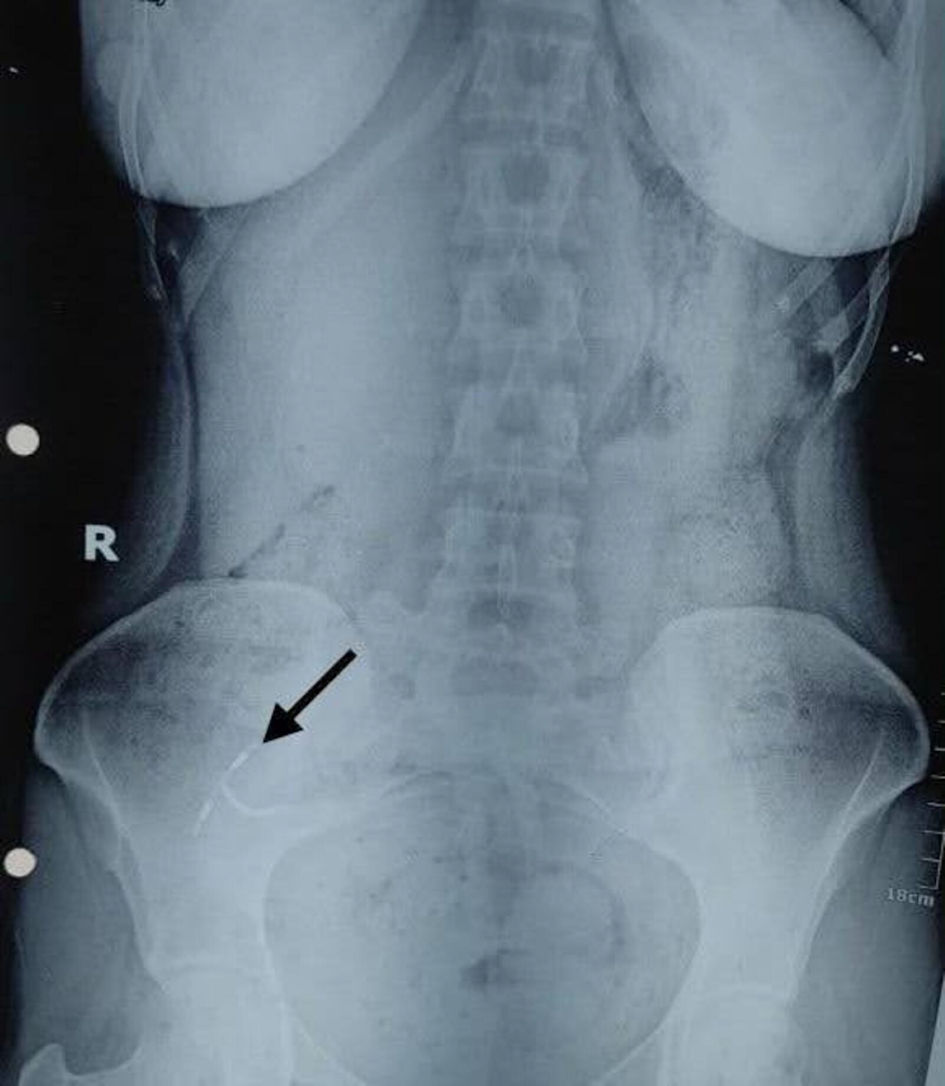 Click for large image | Figure 1. Erect abdominal X-ray. The black arrow shows IUCD in the right iliac fossa region. IUCD: intrauterine contraceptive device. |
The patient underwent a diagnostic laparoscopy. Intraoperatively, upon creation of a pneumoperitoneum, adhesions were found on the anterior abdominal wall in the right iliac fossa. A whitish structure was visible within the adhesions (Fig. 2). On carrying out the dissection, the misplaced IUCD was found within the adhesions. On dissecting further, another tubular structure was found within the adhesions, and upon tracing the lower end of the structure, the base of the cecum was found, with the convergence of three taeniae coli present, confirming the presence of the appendix within the adhesions. The appendix was inflamed, and the horizontal limb of a copper T device was adherent to it (Fig. 3). The copper T device was initially removed from the adhesions and out of the abdominal cavity, and then a laparoscopic appendectomy was carried out by cauterizing the mesoappendix and ligating the base of the appendix with Vicryl 2-0.
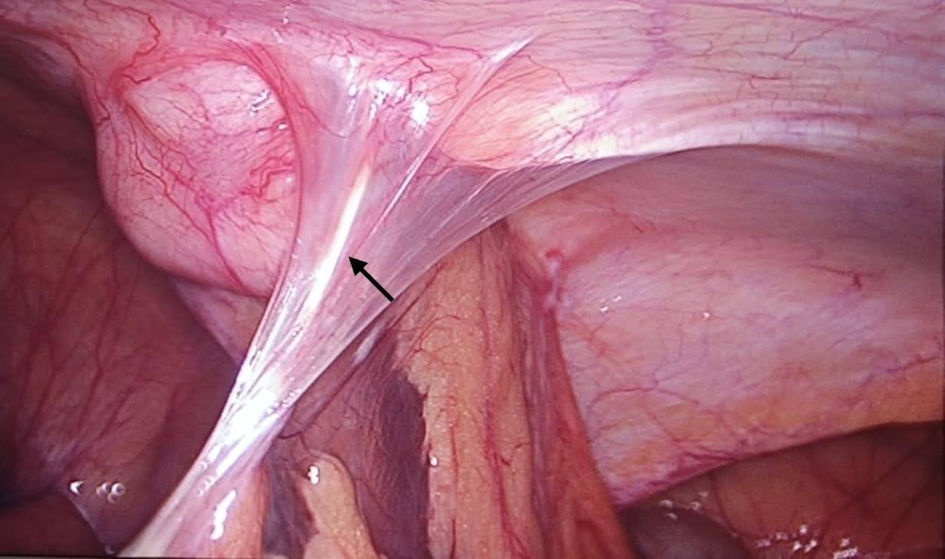 Click for large image | Figure 2. Intraoperative findings. The black arrow shows the vertical limb of the IUCD embedded with the omentum into the tip of the appendix. IUCD: intrauterine contraceptive device. |
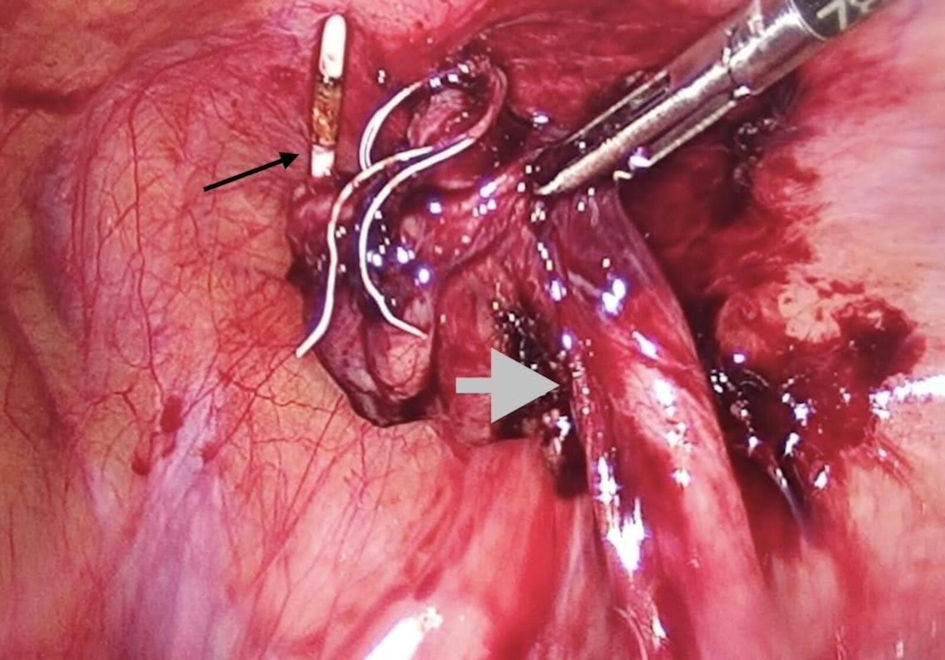 Click for large image | Figure 3. Intraoperative findings while performing the dissection. The black arrow shows the horizontal limb of the IUCD embedded in the appendix with the anterior abdominal wall. The grey arrow shows the inflamed appendix attached to the anterior abdominal wall. IUCD: intrauterine contraceptive device. |
The contraceptive device was a Copper-T 380A, which is long-acting, effective for 10 years, and reversible as well.
The patient was vitally stable in the postoperative period and passed urine and stool normally and was discharged on the third postoperative day. The patient came for follow-up and had no complaints. The histopathological examination of the appendicular specimen retrieved revealed the presence of acute appendicitis.
| Discussion | ▴Top |
A foreign body, such as a copper T intrauterine device, can initiate bacterial proliferation, which may lead to appendicitis. This bacterial proliferation may be aerobic or anaerobic, and no single organism is solely responsible. An unusual intraoperative finding of the migrated IUCD adhering closely to the inflamed appendix helps to identify an important anatomical relationship and raises the possibility of a contribution by the IUCD.
The risk of a copper T device perforating the uterus and contributing to appendicitis is notable due to the close anatomical proximity of the uterus and appendix. Intrauterine devices are commonly used for long-term contraception. Uterine perforation can occur either due to technical difficulties during insertion or as a result of chronic inflammation that slowly weakens and penetrates the uterine wall [3]. This process may be further influenced by natural uterine contractions and pressure gradients between the intrauterine and intraperitoneal spaces [4]. A smaller uterine cavity and increased cervical resistance to dilation may be responsible for an increased risk of uterine perforation in nulliparous women, although supporting evidence is limited [5].
Nevertheless, the exact pathogenesis connecting the migrating IUCD with appendicitis is unknown. Two possibilities exist for the mechanism: (1) The migrating IUCD caused an inflammatory response and adhesions around the appendix; and (2) Primary appendicitis could cause periappendiceal inflammation and adhesions, incorporating the migrating IUCD at a later date. Since the order of events cannot be known from past history, a causal relationship cannot be proven.
There are two main types of IUCDs used these days: non-hormonal, copper-releasing IUCDs and hormonal, levonorgestrel-releasing IUCDs (LNG-IUCDs) [4]. However, in earlier days, another IUCD called Lippes Loop was also in use. Copper-containing IUCDs are associated with greater irritation [4]. Acute appendicitis due to a foreign body occurs in approximately 0.005% of appendectomy specimens [6]. Common foreign bodies include stones, teeth, nails, metal, needles, bones and coins, while IUCDs have rarely been reported in the literature [7].
Few cases have documented IUCD migration associated with acute appendicitis [8, 9], with patients presenting with symptoms such as nausea, vomiting, fever, and abdominal pain. These symptoms may be accompanied by right lower quadrant abdominal tenderness and laboratory findings such as leukocytosis or C-reactive protein levels [10]. Surgical intervention remains the standard approach for a migrated IUCD [4]. Both laparoscopy and laparotomy can be used, but laparoscopy tends to have the edge, with less tissue trauma, quicker procedures, faster recovery, and a lower risk of adhesions [11].
Table 1 [8–10, 12–18] presents a concise review of previously reported cases of IUCD migration involving the appendix, outlining their presentation, operative findings, management approaches, and outcomes in comparison to the current case.
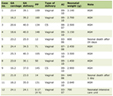 Click to view | Table 1. Appendiceal Migration of Intrauterine Contraceptive Devices: A Review of Reported Cases |
The majority of the patients with IUCD-associated appendicitis were from the middle age group of 20–45 years (90%). Almost all of the females were multiparous (81%) and had previous pregnancies. The device found to have been associated with appendicitis was a copper-containing IUCD in most of the cases, and the duration between copper-T insertion and the appearance of symptoms ranged from 3 months to 18 years. The most common presenting symptoms were lower abdominal pain, with asymptomatic cases being rare. An IUCD with omentum found adherent to the inflamed appendix in the right iliac fossa region of the abdomen explained why lower abdominal pain was the most common presenting symptom. After the surgical intervention, the recovery was uneventful in all the cases.
Conclusions
Uterine perforation and migration outside the uterine cavity are rare complications in the context of the usage of the IUCD. In this particular case, the copper T was found to have migrated into the vicinity of the inflamed appendix. Although the results of the surgical procedure indicate a potential causal relationship between the migration and the inflammation of the appendix, the available data do not prove the cause-and-effect relationship between these two conditions. Thus, this case presents an unusual case of appendicitis in association with the migration of the IUCD.
Acknowledgments
None to declare.
Financial Disclosure
None to declare.
Conflict of Interest
The authors declare that there are no conflicts of interest related to this manuscript.
Informed Consent
Written informed consent was obtained from the patient for publication of this case report and accompanying images.
Author Contributions
Apeksha Sharma: conceptualization, data curation, investigation, literature review, writing – original draft, writing – review and editing. Sahil Ghetiya: data curation, formal analysis, literature review, writing – original draft, writing – review and editing. Jay Patel: investigation, supervision, data curation, literature review, writing – review and editing. Maulik Sadhu: investigation, data curation, literature review, writing – review and editing. All authors have read and approved the final manuscript and agreed to be accountable for all aspects of the work.
Data Availability
The authors declare that data supporting the findings of this study are available within the article.
Abbreviations
IUCD: intrauterine contraceptive device; LNG: levonorgestrel; WBC: white blood cells
| References | ▴Top |
- Bahamondes L, Bottura BF, Bahamondes MV, Goncalves MP, Correia VM, Espejo-Arce X, Sousa MH, et al. Estimated disability-adjusted life years averted by long-term provision of long acting contraceptive methods in a Brazilian clinic. Hum Reprod. 2014;29(10):2163-2170.
doi pubmed - Heinemann K, Reed S, Moehner S, Minh TD. Risk of uterine perforation with levonorgestrel-releasing and copper intrauterine devices in the European Active Surveillance Study on Intrauterine Devices. Contraception. 2015;91(4):274-279.
doi pubmed - Rowlands S, Oloto E, Horwell DH. Intrauterine devices and risk of uterine perforation: current perspectives. Open Access J Contracept. 2016;7:19-32.
doi pubmed - Kaislasuo J, Suhonen S, Gissler M, Lahteenmaki P, Heikinheimo O. Uterine perforation caused by intrauterine devices: clinical course and treatment. Hum Reprod. 2013;28(6):1546-1551.
doi pubmed - Lohr PA, Lyus R, Prager S. Use of intrauterine devices in nulliparous women. Contraception. 2017;95(6):529-537.
doi pubmed - Klingler PJ, Seelig MH, DeVault KR, Wetscher GJ, Floch NR, Branton SA, Hinder RA. Ingested foreign bodies within the appendix: a 100-year review of the literature. Dig Dis. 1998;16(5):308-314.
doi pubmed - Sukhotnik I, Klin B, Siplovich L. Foreign-body appendicitis. J Pediatr Surg. 1995;30(10):1515-1516.
doi pubmed - Chang HM, Chen TW, Hsieh CB, Chen CJ, Yu JC, Liu YC, Shen KL, et al. Intrauterine contraceptive device appendicitis: a case report. World J Gastroenterol. 2005;11(34):5414-5415.
doi pubmed - Carson SA, Gatlin A, Mazur M. Appendiceal perforation by Copper-7 intrauterine contraceptive device. Am J Obstet Gynecol. 1981;141(5):586-587.
doi pubmed - Maree G, Mohammad S, Saleh R, Hoshma A, Makhluf H. Appendiceal perforation caused by an intrauterine contraceptive device: a case report. Case Rep Womens Health. 2022;36:e00447.
doi pubmed - Mosley FR, Shahi N, Kurer MA. Elective surgical removal of migrated intrauterine contraceptive devices from within the peritoneal cavity: a comparison between open and laparoscopic removal. JSLS. 2012;16(2):236-241.
doi pubmed - Sebai A, Elaifia R, Atri S, Hammami M, Haddad A, Kacem JM. Intrauterine device migration resulting in acute appendicitis: a case report. Int J Surg Case Rep. 2024;117:109515.
doi pubmed - Raghavan V, Anand R. A rare case of misplaced copper - T in appendix along with appendicitis. Asian Res J Gynaecol Obst. [Internet]. 2023;6(1):116-120. Available from: https://journalarjgo.com/index.php/ARJGO/article/view/177.
- Mahgoob N, Saber Ali DM. Acute appendicitis due to missed intrauterine contraceptive device, a case report and literature reviews. Jour Med Resh and Health Sci. 2022;5:2177-2181.
doi - Zamani Bonab M, Anvari Aliabad R, Alimohammadi S. Migration of intrauterine device caused asymptomatic acute appendicitis: a case report. Clin Case Rep. 2021;9(5):e04283.
doi pubmed - Uysal G, Nazik H, Tanridan Okcu N, Seyfettinoglu S, Kazgan H. Surgical removal of an extrauterine device migrating to appendix. Case Rep Med. 2016;2016:4732153.
doi pubmed - Aliosmanoglu I, Gul M, Kapan M, Onder A, Boyuk A, Gumus M. An exceptional cause of acute appendicitis: Intrauterine Device. Journal of Current Surgery. North America. 2011;1(1):41-43.
doi - Singhal S, Marwah D, Paul A, Singhal S: Missed intra uterine device: a rare indication for appendicectomy case report with review of literature. East Cent Afr J Surg. 2010;15:156-158.
- Goldman JA, Peleg D, Feldberg D, Dicker D, Samuel N. IUD appendicitis. Eur J Obstet Gynecol Reprod Biol. 1983;15(3):181-183.
doi pubmed
This article is distributed under the terms of the Creative Commons Attribution 4.0 International License (CC BY 4.0), which permits unrestricted use, distribution, and reproduction in any medium, including commercial use, provided the original work is properly cited.
Journal of Clinical Gynecology and Obstetrics is published by Elmer Press Inc.