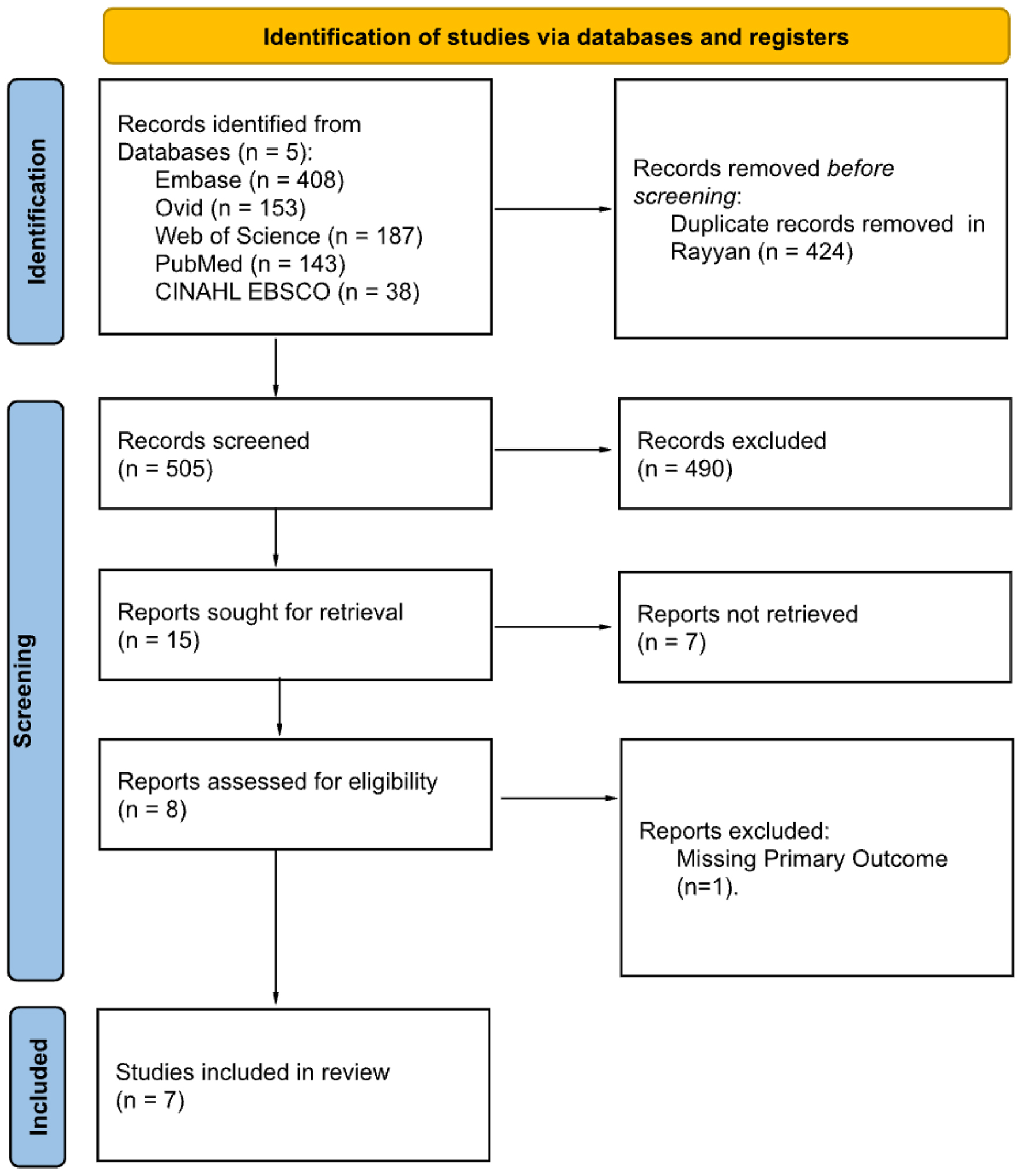
↓ Figure 1. Preferred Reporting Items for
Systematic Reviews and Meta-Analyses (PRISMA) diagram. Adapted from Ref [13].
| Journal of Clinical Gynecology and Obstetrics, ISSN 1927-1271 print, 1927-128X online, Open Access |
| Article copyright, the authors; Journal compilation copyright, J Clin Gynecol Obstet and Elmer Press Inc |
| Journal website https://jcgo.elmerpub.com |
Review
Volume 14, Number 4, December 2025, pages 113-121
Microbiome Dysbiosis in Lichen Sclerosus: A Systematic Review
Figure
Tables
| Study characteristics | Inclusion criteria | Exclusion criteria |
|---|---|---|
| Population | Female patients with lichen sclerosus diagnosed clinically or via biopsy of any age | Animals, males |
| Context | Vulvar skin and/or vaginal microbiome composition in the setting of lichen sclerosus | General population only (not involving patients with lichen sclerosus) |
| Study design | Retrospective chart reviews, cohort studies, case-control studies, case series, cross-sectional studies | Case reports, review articles, editorials, protocols, animal studies, studies with < 5 participants |
| Publication | After 2000; accessible in English | Before 2000; not accessible in English |
| Study | Alpha diversity | Microbes of interest |
|---|---|---|
| Alpha diversity metrics are described as higher, lower, or no difference by comparing vulvar lichen sclerosus patients to controls. Taxa are described to be in higher (H) or lower (L) relative abundance or no difference (N) when comparing patients with lichen sclerosus to patients without lichen sclerosus. *Not statistically significant. All other values have a P-value < 0.05. | ||
| Chattopadhyay et al (2021) [15] | No difference (Shannon) | Firmicutes* (L) Prevotella (H) Peptoniphilus (H) Campylobacter (H) Porphyromonas (H) Clostridium (H) Enterobacter cloacae (H) Prevotella melaninogenica (H) |
| Liu et al (2022) [10] | Lower (ACE, Chao1) No difference (Shannon, Pielou) |
Firmicutes (L) Gammaproteobacteria (H) Clostridia (H) Lactobacillales (L), Lactobacillaceae (L) Atopobiaceae (L), Atopobium (L) Enterobacteriaceae (H) Prevotella (N) Lactobacillus (L) Peptoniphilus (H) Porphyromonas (H) Campylobacter (H), Campylobacter ureolyticus (H) Lactobacillus jensenii (H) Lactobacillus iners (L) |
| Ma et al (2024) [11] | No difference (ACE, Chao1, Obs richness) | Prevotella (L) Campylobacter ureolyticus (H) |
| Pagan et al (2023) [9] | Lower (Shannon) No difference (Chao1) |
Papillomaviridae (H) Prevotella (L) Alphapapillomavirus (H) |
| Pyle et al (2024) [16] | Lower (4/4) | Firmicutes (L - perineum) Lactobacillus (L - clitoris) Atopobium (L - clitoris) Candida (H - labia minora), Candida glabrata (L - all) Lactobacillus jensenii (L - perineum) |
| Study | Alpha diversity | Microbes of interest |
|---|---|---|
| Alpha diversity metrics are described as higher, lower, or no difference by comparing vulvar lichen sclerosus patients to controls. Taxa are described to be in higher (H) or lower (L) relative abundance or no difference (N) when comparing patients with lichen sclerosus to patients without lichen sclerosus. *Not statistically significant. All other values have a P-value < 0.05. | ||
| Brunner et al (2021) [17] | No difference (Simpson, Chao1, Shannon) | Streptococcus (N) Lactobacillus (N) Lactobacillus iners (H) Streptococcus anginosus (N) |
| Ma et al (2024) [11] | Lower (ACE, Chao1, Obs richness) | Fusobacteriota (L), Fusobacteriia
(L) Bifidobacteriaceae (H) Prevotellaceae (L) Streptococcus (N) Lactobacillus (N) Lactobacillus crispatus (H) Lactobacillus acidophilus (H) Bifidobacterium bifidum (H) Prevotella sp. (L) |
| Nygaard et al (2023) [18] | No difference (ASV, Shannon, Pielou) | Streptococcaceae (H - Lower vagina) Bifidobacterium (H - Lower vagina) Streptococcus (H - Lower vagina) Lactobacillus (N) |
| Pyle et al (2024) [16] | No difference (Shannon) | Saccharomyces (H) Candida (H) |
| Study | Alpha diversity | Microbes of interest |
|---|---|---|
| Alpha diversity metrics are described as higher, lower, or no difference by comparing vulvar lichen sclerosus patients to controls. Taxa are described to be in higher (H) or lower (L) relative abundance or no difference (N) when comparing patients with lichen sclerosus to patients without lichen sclerosus. *Not statistically significant. All other values have a P-value < 0.05. | ||
| Ma et al (2024) [11] | Higher | Gammaproteobacteria (H) Rikenellaceae* (H) Bacteroidaceae*, Bacteroides* (L) Coriobacteriales bacterium DNF00809 (H) |
| Chattopadhyay et al (2021) [15] | Higher | Firmicutes (L) Proteobacteria (H) Clostridiales (H) Rikenellaceae (H) |
| Nygaard et al (2023) [18] | No difference | Euryarchaeota (H) Coriobacteriia, Coriobacteriales (H) Bacteroidaceae, Bacteroides (L) |